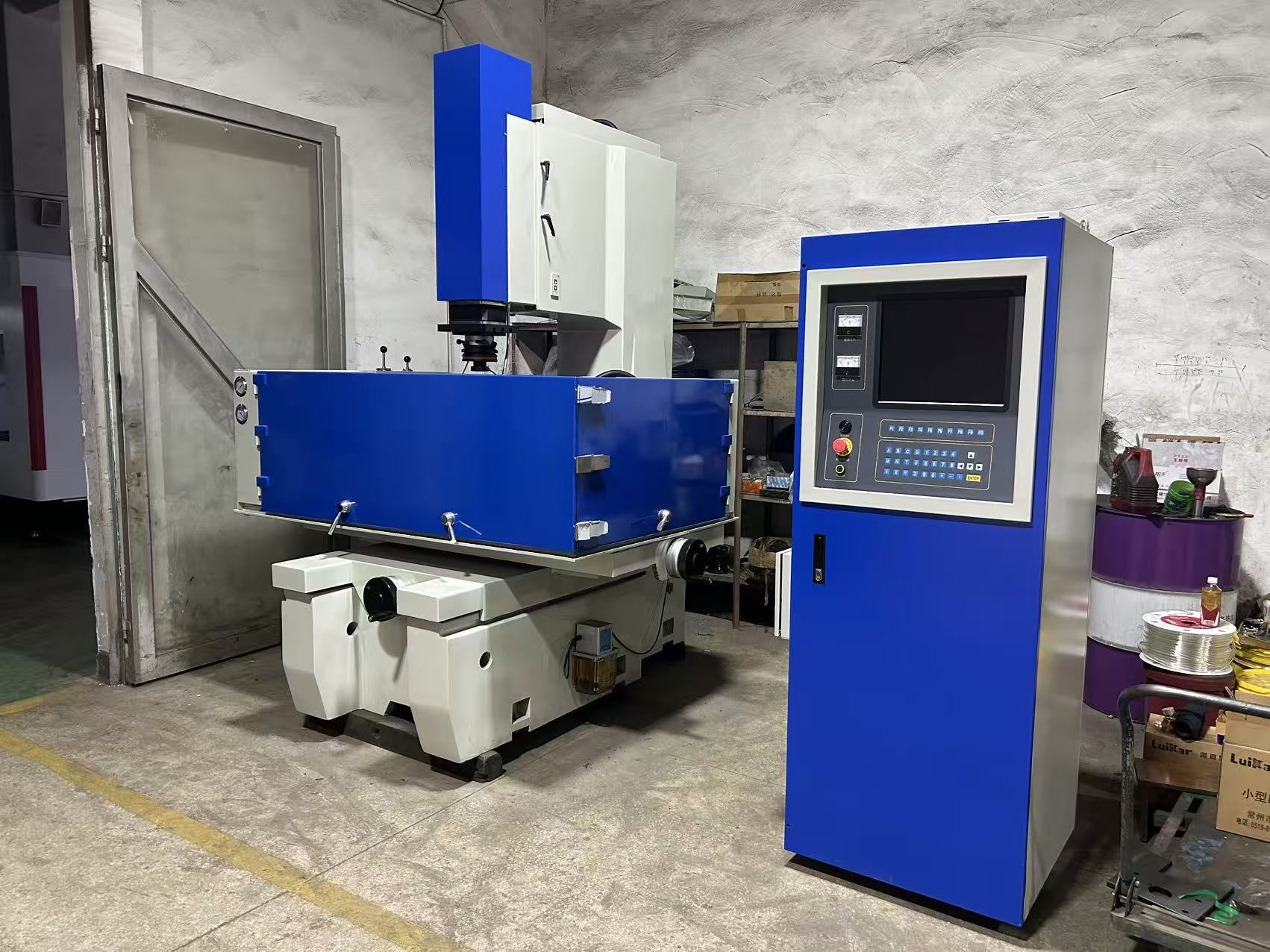
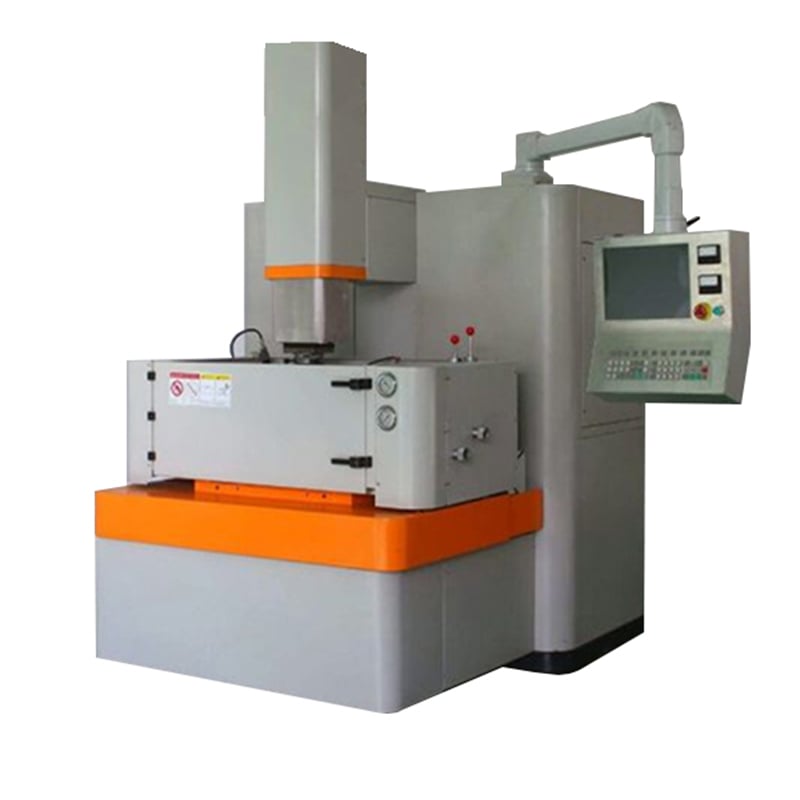
A die-sinking EDM machine forms cavities and three-dimensional details in electrically conductive workpieces by controlled electrical discharges between a shaped electrode and the workpiece in dielectric fluid. Because the electrode does not cut by direct mechanical contact, the process can be used for hardened conductive materials and cavity geometries that are difficult to produce with conventional cutting tools.
HarsMarg offers both ZNC die-sinking EDM machines and CNC die-sinking EDM machines. The correct choice depends on the required axis control, work envelope, tank size, workpiece and electrode loads, vertical clearance, generator configuration and target process result.
| Machine type | Positioning and control | When to consider it | Current HarsMarg range |
|---|---|---|---|
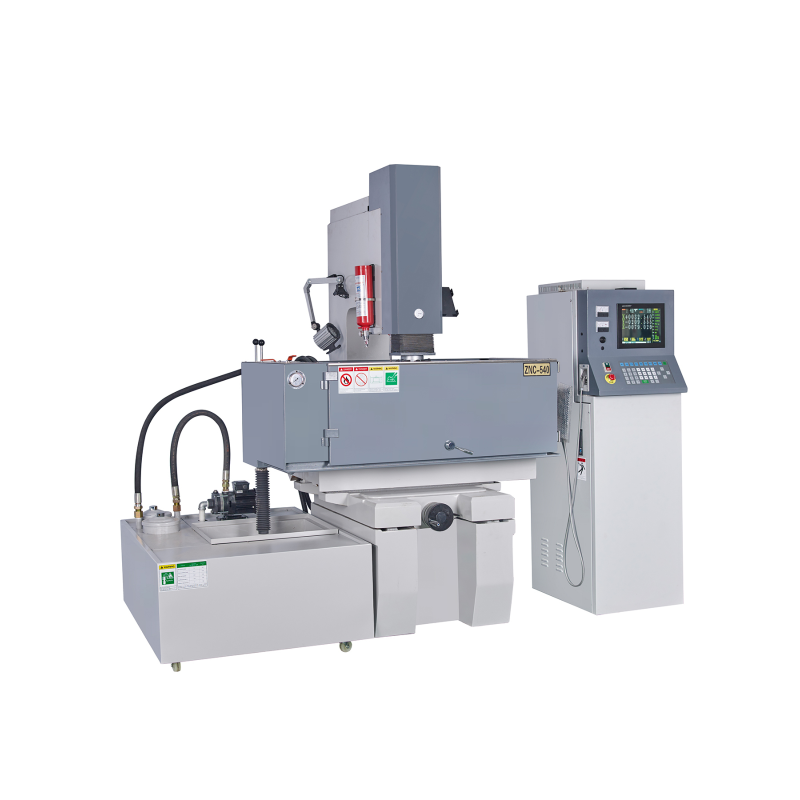
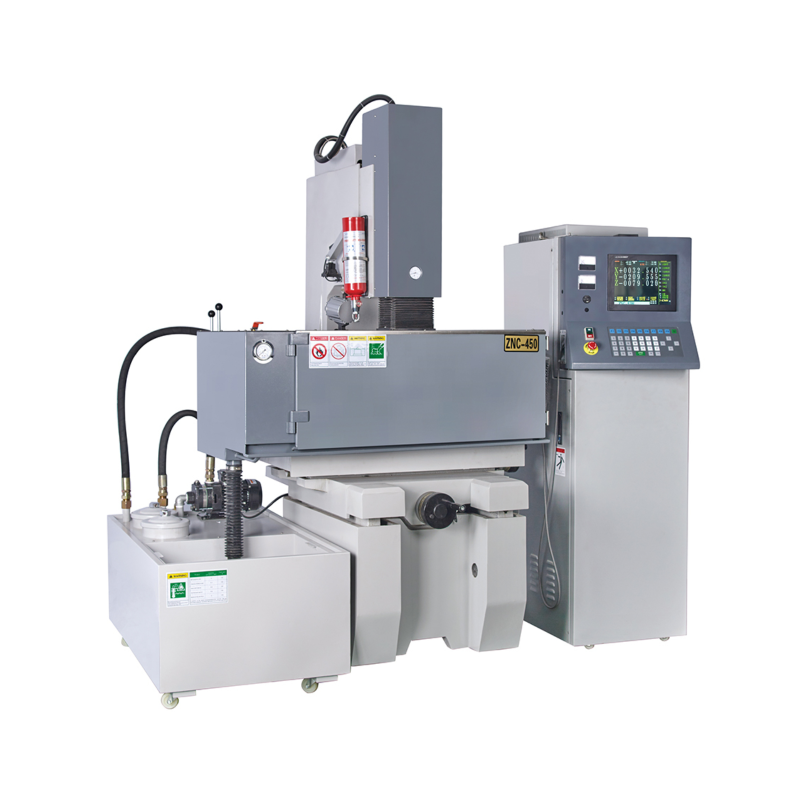
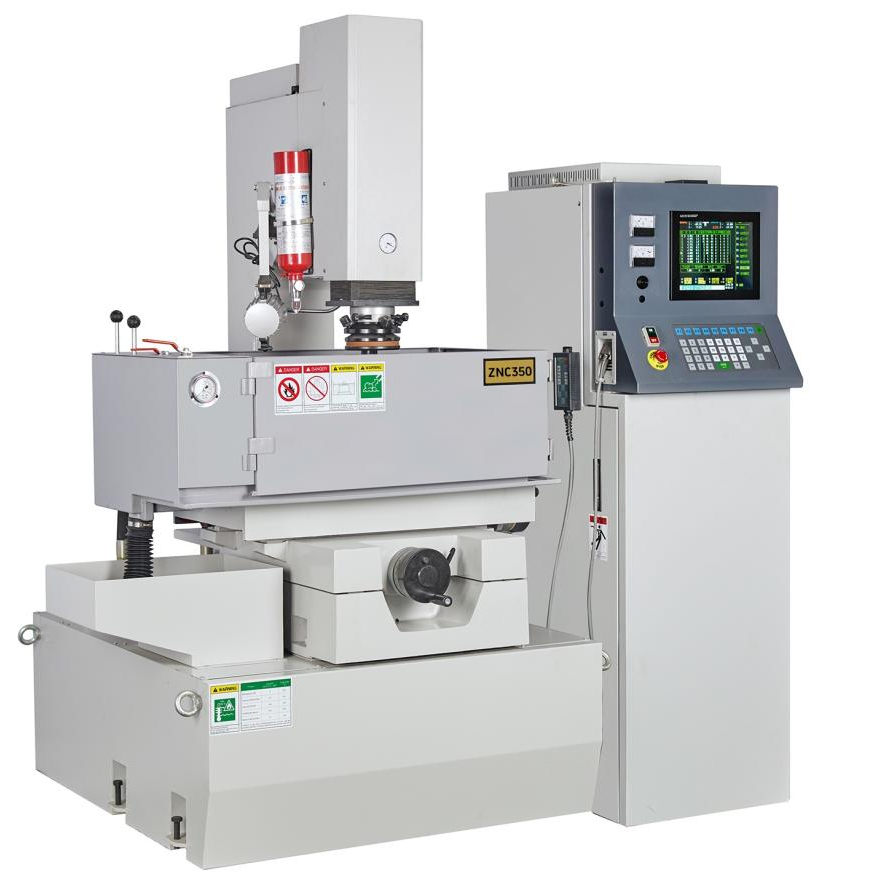
| ZNC die-sinking EDM | Manual X/Y positioning with a three-axis digital readout; servo-controlled Z-axis machining | Conventional cavity sinking where the operator can position X/Y manually and the Z-axis performs programmed machining cycles | ZNC-350, ZNC-450 (D7145), ZNC-540, ZNC-650 and ZNC-700 |
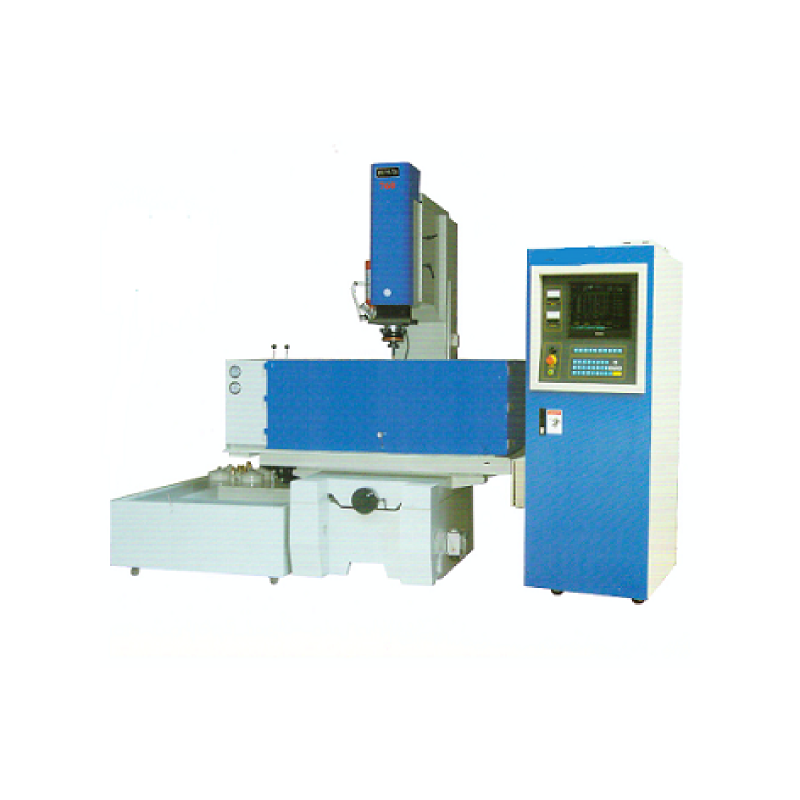
| CNC die-sinking EDM | CNC-controlled X/Y/Z positioning with coordinated linear, circular and helical interpolation | Jobs that require programmed multi-position work, coordinated axis motion or more automated machining sequences | CNC300–CNC1200 series |
A three-axis DRO displays position but does not make a ZNC machine a three-axis CNC machine. Select the control type from the required machining path and workflow, not from the number of displayed axes.
First check that the X/Y/Z travel, worktable and work-tank dimensions accommodate the part, fixture and electrode. Then verify the maximum workpiece and electrode weights and the usable distance from the electrode mounting face to the table. Generator current in amperes and rated input capacity in kVA are different specifications and should be reviewed separately.
Published material removal rate, surface finish, electrode wear and machining accuracy are reference results under specified machining conditions. Actual results vary with workpiece and electrode materials, electrode area and geometry, polarity, discharge settings, cavity depth, dielectric condition and flushing method.
Please send the workpiece material, overall dimensions and weight; cavity drawing, depth and minimum internal corner; electrode material, size, weight and quantity; target tolerance and surface finish; required cycle time; preferred control type; local voltage, frequency and phase; destination country; and any orbiting or automation requirement. HarsMarg can then recommend a model and evaluate whether sample machining is required.
Compare the ZNC range and CNC range, or send your drawing for a technical model recommendation.

 EN
EN