EN
EN



When conventional cutting tools struggle against hardened steel, carbide, or exotic alloys, EDM machines step in as the definitive solution. EDM machines use controlled electrical discharges to erode material with extreme precision, bypassing the mechanical force limitations that cause conventional tooling to wear, deflect, or fail entirely. This fundamental difference in working principle is exactly why EDM machines have become indispensable in industries that routinely process the hardest, toughest materials on the production floor.
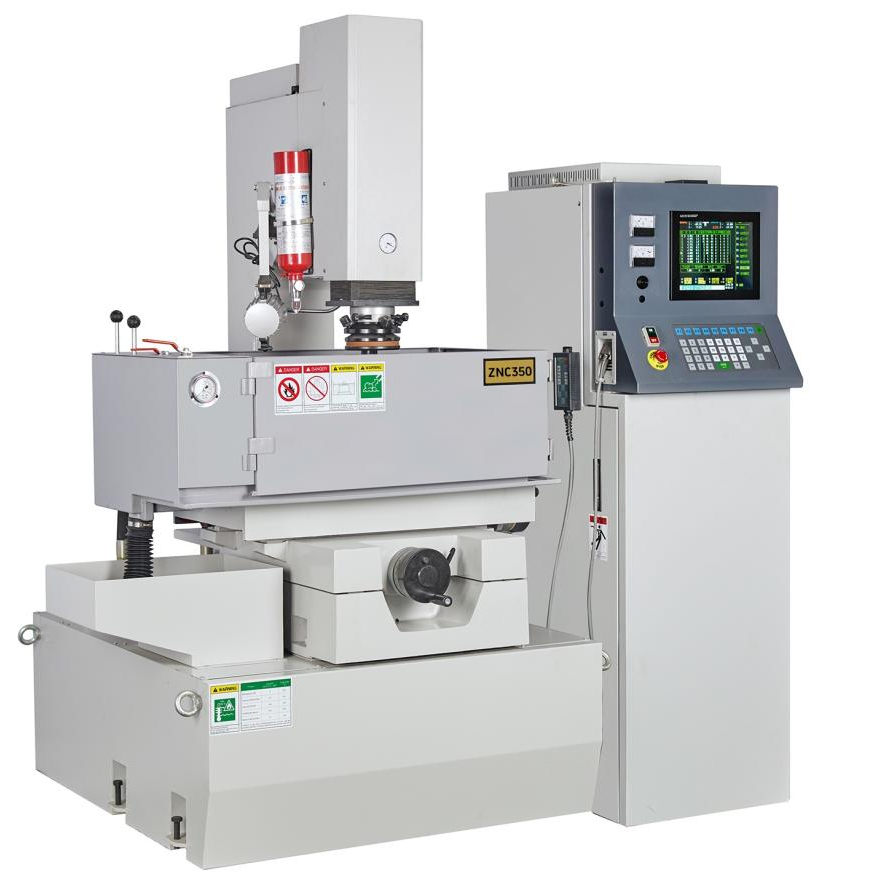
EDM machines operate on the principle of spark erosion, where rapid electrical discharges between an electrode and a workpiece remove material in a highly controlled manner. Because EDM machines remove material thermally rather than mechanically, the hardness of the workpiece becomes essentially irrelevant to the process. This makes EDM machines uniquely suited for applications where material hardness, brittleness, or complex geometry would make traditional machining impractical or impossible. Understanding these advantages helps manufacturers, toolmakers, and engineers make better decisions about when to deploy EDM machines on the production floor.
The Core Advantage of EDM Machines on Hard Materials
Hardness Is Not a Barrier for EDM Machines
The most significant advantage of EDM machines in hard material machining is the complete independence from workpiece hardness. Traditional milling and turning operations rely on a cutting tool that must be harder than the material being cut, which creates a practical ceiling when working with materials like hardened tool steel, sintered carbide, or polycrystalline materials. EDM machines sidestep this limitation entirely. Because the material removal in EDM machines is achieved through spark discharge energy rather than mechanical shear, even materials rated above 60 HRC can be machined with the same operational setup as softer materials.
This property makes EDM machines particularly valuable in die and mold manufacturing, where tool steel must be hardened before finish machining to maintain dimensional stability. With EDM machines, manufacturers can machine the component after full heat treatment, eliminating the distortion that often occurs when hardened parts are subjected to the cutting forces of conventional machining. The result is tighter tolerances and more consistent part quality across production runs.
Residual Stress and Surface Integrity with EDM Machines
EDM machines apply no mechanical force to the workpiece during material removal. This zero-contact nature means that EDM machines produce virtually no residual mechanical stress in the machined surface layer. For hard, brittle materials such as ceramics, carbide compacts, and hardened bearing steels, this is critical. Conventional machining on these materials risks micro-cracking, chipping, and subsurface deformation that compromise part integrity and fatigue life. EDM machines avoid these failure modes, delivering surfaces that retain their structural characteristics even after aggressive material removal.
Precision and Geometry Capabilities of EDM Machines
Complex Profiles and Tight Tolerances
EDM machines excel at producing complex internal profiles, sharp internal corners, deep narrow slots, and intricate cavity shapes that are geometrically impossible or economically impractical with rotary cutting tools. Die-sinking EDM machines, for example, replicate the exact three-dimensional form of a shaped electrode into the workpiece surface. This capability is extremely valuable in the production of injection mold cavities, forging dies, and stamping tools, all of which require precise recesses in fully hardened steel blocks. EDM machines achieve tolerances in the range of a few micrometers, which satisfies even the most demanding toolroom standards.
Wire-cut EDM machines extend this precision to two-dimensional contour cutting, enabling the production of punches, inserts, and fine-pitch components from hardened plate stock without any risk of thermal distortion from cutting heat. Because EDM machines maintain consistent spark gap control through servo feedback systems, dimensional repeatability across a batch is reliably high, reducing the need for manual fitting and rework in downstream assembly operations.
Fine Surface Finish on Hard Workpieces
Surface finish is another area where EDM machines demonstrate clear advantages over grinding or hard milling when working on difficult materials. EDM machines can be programmed to apply progressively finer finishing passes, reducing the discharge energy in stages to achieve surface roughness values well below Ra 0.4 micrometers on hardened steel. This finish quality is critical for mold cavity surfaces, where surface texture directly affects the cosmetic quality of molded plastic parts. EDM machines accomplish this without requiring specialized abrasive tooling or complex clamping arrangements associated with grinding operations.
Operational and Economic Advantages of EDM Machines
Reduced Tool Wear and Setup Complexity
EDM machines eliminate electrode-to-workpiece contact during cutting, which means there is no conventional tool wear driven by abrasion against a hard surface. In operations involving carbide or hardened steel, conventional milling cutters wear rapidly and require frequent replacement, increasing both tooling cost and machine downtime for tool changes. EDM machines use electrodes made from graphite or copper, materials that erode slowly under controlled discharge conditions. Modern EDM machines incorporate automatic electrode wear compensation, further extending electrode life and reducing the frequency of manual intervention during long unattended runs.
The setup process for EDM machines is also well adapted to low-volume, high-complexity work typical in toolrooms and prototype departments. EDM machines do not require the rigid workholding and vibration control that hard milling demands at high spindle speeds. This makes EDM machines more accessible for shops that lack heavy-duty machining centers but need to process hardened components reliably.
Compatibility with Difficult-to-Machine Alloys
Beyond tool steel, EDM machines are routinely applied to titanium alloys, Inconel superalloys, tungsten carbide composites, and other materials that are notoriously difficult to machine by conventional means. EDM machines process these materials at rates that, while slower than conventional cutting, are consistent and predictable. For aerospace and medical device manufacturers who cannot compromise on material selection, EDM machines provide a reliable processing route that conventional machining simply cannot match on the hardest and most chemically resistant alloy grades.
FAQ
What types of hard materials can EDM machines process?
EDM machines can process a wide range of hard and difficult materials, including hardened tool steel, carbide, titanium alloys, Inconel, stainless steel, and certain ceramics. The key requirement is that the material must be electrically conductive, which most metallic hard materials satisfy. EDM machines are not suitable for non-conductive materials such as glass or unfilled polymer composites.
Are EDM machines suitable for high-volume production of hard material parts?
EDM machines are most cost-effective in low-to-medium volume production where complexity and precision requirements are high. For very high-volume, simple-geometry hard material work, other processes may be more economical. However, EDM machines are often the preferred choice for toolroom components, mold inserts, and precision dies where accuracy outweighs cycle time considerations. Modern EDM machines with automation features can improve throughput significantly in appropriate applications.
How do EDM machines compare to grinding for hard material finishing?
Grinding is effective for flat or cylindrical surfaces on hard materials, but EDM machines outperform grinding when complex three-dimensional cavities or internal profiles are required. EDM machines can reach blind pockets, undercuts, and fine internal corners that grinding wheels cannot access. For surface finish on flat areas, precision grinding may achieve slightly superior Ra values, but EDM machines offer greater geometric flexibility and are the preferred solution when form accuracy in complex shapes is the primary concern.