EN
EN



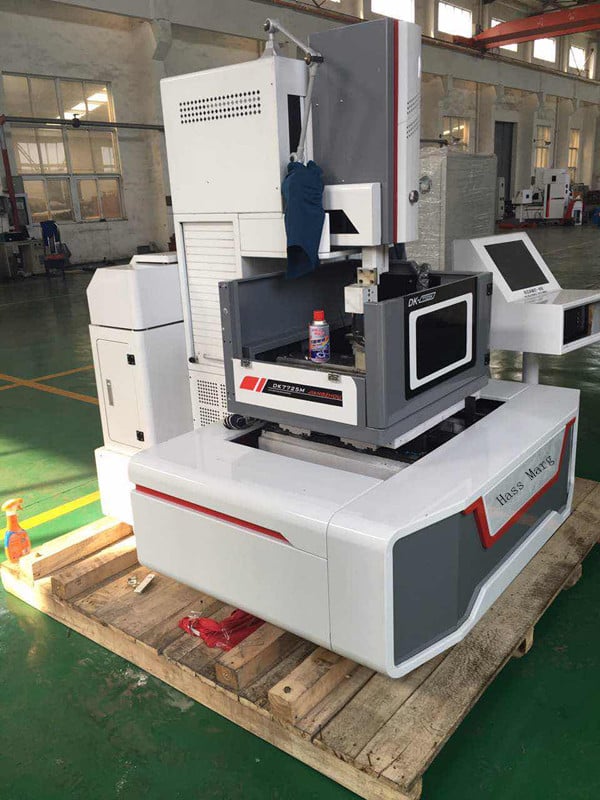
When engineers and procurement specialists begin exploring precision machining solutions, one of the first questions that comes up is how many types of EDM machines actually exist and what distinguishes them from one another. Electrical Discharge Machining has become one of the most reliable and versatile non-contact manufacturing processes available in modern industrial environments, and understanding its different machine categories is essential before making any investment decision. The technology itself works by using controlled electrical sparks to erode conductive material with exceptional precision, making it suitable for complex geometries that would be impossible to achieve through conventional cutting methods.
The landscape of EDM machines is broader than many buyers initially expect. Rather than being a single uniform technology, EDM encompasses several distinct machine types, each engineered for specific applications, material characteristics, and production requirements. Whether you are working in aerospace tooling, medical device manufacturing, or high-precision mold making, knowing which category of EDM machines aligns with your needs can save considerable time, cost, and engineering effort. This article explores the primary types of EDM machines, their working principles, and the industrial contexts where each one delivers maximum value.
The Core Categories of EDM Machines
Die Sinking EDM Machines
Die sinking EDM machines, also frequently referred to as ram EDM or sinker EDM, are among the most widely used EDM machines in industrial manufacturing. They operate by pressing a pre-shaped electrode — typically made from graphite or copper — into the workpiece while submerging both in a dielectric fluid. The electrode never physically contacts the workpiece; instead, a series of rapid electrical discharges erodes the material in the exact shape of the electrode form. This process is ideal for creating cavities, molds, and complex three-dimensional recesses in hardened steel or other conductive alloys.
The key advantage of die sinking EDM machines lies in their ability to produce intricate internal geometries that would be extremely difficult to machine using rotating cutters or grinding tools. Mold makers frequently rely on this category to produce plastic injection molds, die casting molds, and forging dies. Because the electrode shape directly determines the cavity shape, careful electrode design and preparation are critical steps in the overall workflow. Modern CNC-controlled die sinking EDM machines offer multi-axis movement and automated electrode changers, significantly improving throughput without sacrificing accuracy.
In precision tool and die shops, die sinking EDM machines are considered an essential asset. Their ability to work on hardened materials after heat treatment means that dimensional distortions from heat are eliminated as a concern, resulting in parts that hold tight tolerances from the very first cycle. The surface finish quality achievable with sinker EDM can range from rough stock removal to mirror-like finishes, depending on the chosen electrical parameters.
Wire EDM Machines
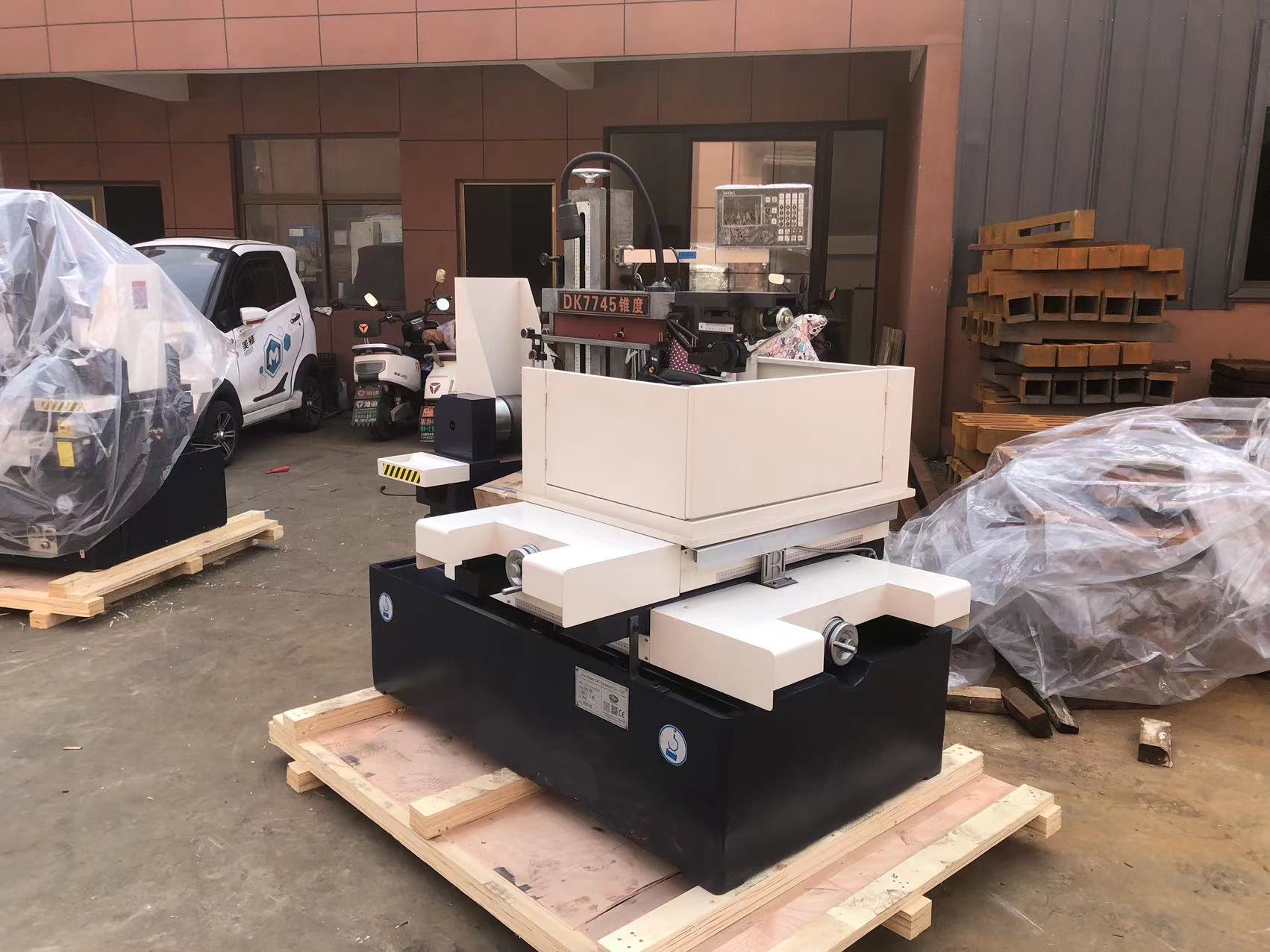
Wire EDM machines use a continuously fed thin metallic wire — typically brass, coated, or zinc-coated — as the electrode to cut through a conductive workpiece. Unlike die sinking EDM machines that use a formed electrode, wire EDM machines guide the wire along a programmed path to produce precise two-dimensional or tapered profiles. The cutting wire never reuses the same section twice, which ensures consistent erosion performance throughout the entire cutting operation. Dielectric fluid, usually deionized water, flushes away eroded particles and cools the cutting zone continuously.
Wire EDM machines are particularly valued in industries that require accurate profiles with extremely tight dimensional tolerances. Punch and die sets, extrusion dies, fine blanking tools, and intricate components for medical devices are commonly produced using this technology. The wire path is controlled by CNC software, allowing complex curves, sharp internal corners, and even taper cuts to be executed with repeatability that manual or conventional machining cannot match. Some advanced wire EDM machines can produce surface finishes comparable to grinding, which reduces or eliminates secondary finishing operations.
One of the practical advantages that wire EDM machines offer over die sinking models is the elimination of custom electrode fabrication. Because the wire itself serves as the electrode, setup time is reduced significantly, and the cost per part can be lower for certain profile-cutting applications. Wire EDM machines are a preferred choice when the priority is accurate contour cutting rather than cavity formation.
Specialized EDM Machine Variants
Hole Drilling EDM Machines
Hole drilling EDM machines, sometimes called fast hole EDM or start-hole EDM machines, are designed specifically to drill small, precise holes in conductive materials at very high speeds relative to other EDM processes. These EDM machines use a hollow rotating tubular electrode through which the dielectric fluid is flushed at high pressure, enabling rapid material removal even in very hard or difficult-to-machine alloys. The rotation of the electrode combined with the flushing action allows holes with depth-to-diameter ratios that would be impractical with conventional drilling.
Turbine blade cooling holes, fuel injector nozzles, and filter screens are typical examples of components produced using hole drilling EDM machines. In aerospace manufacturing, where nickel superalloys and titanium are standard materials, these EDM machines provide a reliable method for producing cooling hole arrays with consistent dimensions. They are also widely used to create start holes for wire EDM operations when the wire cannot be threaded through a pre-existing opening in the workpiece.
The speed of hole drilling EDM machines makes them commercially viable for both prototype and production volumes. Since the process is non-contact, there is no tool deflection or burr formation, which is a significant advantage when machining thin-walled or delicate structures. Multi-spindle configurations are available for manufacturers requiring simultaneous multi-hole drilling to maximize productivity.
EDM Grinding Machines
EDM grinding machines apply the principles of electrical discharge erosion in a rotary configuration analogous to conventional cylindrical or surface grinding. In this category of EDM machines, the rotating electrode acts as a grinding wheel equivalent, removing material from the workpiece surface without the mechanical contact stresses associated with abrasive grinding. This makes EDM grinding machines particularly valuable when working with extremely hard or brittle materials such as polycrystalline diamond, carbide composites, or ceramic-bonded materials.
Tool and cutter manufacturers use EDM grinding machines to shape and sharpen tungsten carbide cutting tools, form complex profiles on hard metal blanks, and create precise external geometries on materials that would wear out conventional grinding wheels rapidly. The process can be adapted for both cylindrical and form grinding applications, making it a flexible addition to precision tool-making environments. Because there is no mechanical force applied to the workpiece, fragile or thin-walled components remain dimensionally stable during machining.
While EDM grinding machines are less commonly discussed than sinker or wire EDM machines, they occupy an important niche in advanced materials processing. Their ability to handle materials at the extreme end of hardness without inducing residual stress or micro-cracking makes them indispensable in specialized manufacturing sectors where other EDM machines would struggle to perform effectively.
CNC Integration Across EDM Machine Types
The Role of CNC Control in Modern EDM Machines
Across all categories of EDM machines, CNC (Computer Numerical Control) integration has fundamentally transformed what is achievable in terms of complexity, repeatability, and production efficiency. Modern EDM machines are equipped with sophisticated CNC controllers that manage multiple axes of motion simultaneously, monitor gap conditions in real time, and automatically adjust discharge parameters to maintain optimal machining stability. This level of automation reduces operator dependence and enables unmanned or lights-out manufacturing scenarios that are increasingly important in competitive B2B production environments.
CNC-controlled EDM machines also facilitate direct integration with CAD/CAM systems, allowing engineers to translate complex 3D models directly into machine programs without manual intervention. The ability to simulate machining paths and predict electrode wear or wire consumption before actual machining begins helps reduce material waste and setup errors. For high-value workpieces such as aerospace components or precision medical implants, this pre-process simulation capability is not a luxury but a practical necessity.
The advancement of CNC technology in EDM machines has also led to improved surface integrity control. Operators can select from a library of pre-programmed discharge conditions to achieve specific surface roughness values, hardened surface layers, or stress-free finishes depending on the application requirement. This programmable versatility makes CNC EDM machines highly adaptable across a wide range of production scenarios without requiring physical tooling changes.
Automation and Multi-Electrode Capability
Many contemporary EDM machines, particularly in the die sinking category, incorporate automatic tool changers (ATCs) that allow multiple electrodes to be stored, indexed, and deployed during a single machining cycle. This capability allows a single workpiece to be processed through roughing, semi-finishing, and finishing stages using different electrode configurations without manual intervention. The result is improved surface quality, reduced cycle time, and more consistent dimensional outcomes across production batches.
For manufacturers running EDM machines in high-volume production environments, robotic workpiece loading systems can be integrated directly with the machine controller to enable fully automated cell operation. A robot retrieves finished parts, loads new blanks, and communicates with the EDM machine's CNC to initiate the next machining program automatically. This level of integration is increasingly standard in modern precision manufacturing facilities that depend on EDM machines to maintain competitive lead times.
Choosing the Right Type of EDM Machine for Your Application
Factors That Determine Machine Type Selection
Selecting the appropriate type from the available EDM machines requires a systematic evaluation of several key factors. The geometry of the feature being produced is the primary driver — cavity formation naturally points toward die sinking EDM machines, while profile cutting points toward wire EDM machines. The material being machined, its hardness, and its thermal sensitivity also play significant roles in narrowing down the options. EDM machines are inherently limited to electrically conductive workpieces, which is a universal constraint across all machine types.
Production volume and throughput requirements influence the decision as well. For high-volume applications requiring consistent part profiles, wire EDM machines with automatic wire threading and large workpiece capacity provide efficient solutions. For prototype tooling or low-volume cavity work, a versatile CNC die sinking EDM machine may offer better flexibility. Hole drilling EDM machines are the clear choice when fine-diameter deep holes in hard materials are the primary requirement.
Surface finish requirements, tolerance specifications, and the availability of skilled operators or programming resources also factor into the selection process. Some EDM machines demand more skilled setup and programming than others, particularly when complex 3D electrode paths or simultaneous multi-axis contouring are involved. Buyers should evaluate the total cost of ownership — including consumables, electrode materials, dielectric fluid management, and maintenance contracts — not just the initial machine purchase price.
Industry-Specific Applications of EDM Machine Types
Different industries gravitate toward specific types of EDM machines based on the recurring nature of their production challenges. The mold and die industry remains the largest user of die sinking EDM machines due to the constant demand for complex cavities in hardened tool steels. The aerospace sector relies heavily on both wire EDM machines and hole drilling EDM machines for structural components, turbine hardware, and fuel system parts. Medical device manufacturers prefer wire EDM machines when producing implantable components that require contaminant-free, burr-free surfaces with extremely precise profiles.
The electronics and semiconductor equipment industries use wire and die sinking EDM machines for producing precision fixtures, guides, and micro-scale components where tolerances are measured in microns rather than millimeters. In the energy sector, EDM machines produce critical valve components, nozzles, and complex flow-control geometries in exotic alloys that resist conventional machining. The breadth of industries that depend on EDM machines continues to expand as new materials and more demanding part geometries enter mainstream production requirements.
FAQ
How many main types of EDM machines are there?
There are four primary types of EDM machines: die sinking (sinker) EDM machines, wire EDM machines, hole drilling EDM machines, and EDM grinding machines. Each type uses controlled electrical discharge erosion but applies it through a different electrode configuration and mechanical setup to address distinct machining requirements.
Can EDM machines be used on non-conductive materials?
No, EDM machines require the workpiece to be electrically conductive because the material removal process depends entirely on electrical discharge between the electrode and the workpiece. Materials such as ceramics, plastics, and glass cannot be directly machined by standard EDM machines unless they are modified with conductive coatings or composite structures.
What is the difference between wire EDM machines and die sinking EDM machines?
Wire EDM machines use a continuously moving thin wire to cut through a workpiece along a programmed two-dimensional or tapered path, making them ideal for profile cutting and contour work. Die sinking EDM machines, by contrast, use a pre-formed electrode that is pressed into the workpiece to create a three-dimensional cavity or recess that mirrors the electrode shape. The two types of EDM machines address fundamentally different machining geometries.
Are CNC EDM machines suitable for small batch production?
Yes, CNC EDM machines are well suited for small batch and prototype production as well as high-volume runs. The ability to store and recall machining programs quickly makes CNC EDM machines highly flexible for job shops and toolmakers who frequently switch between different part geometries. Setup times are reduced considerably compared to manual EDM machines, making even single-piece production economically viable in many cases.