EN
EN



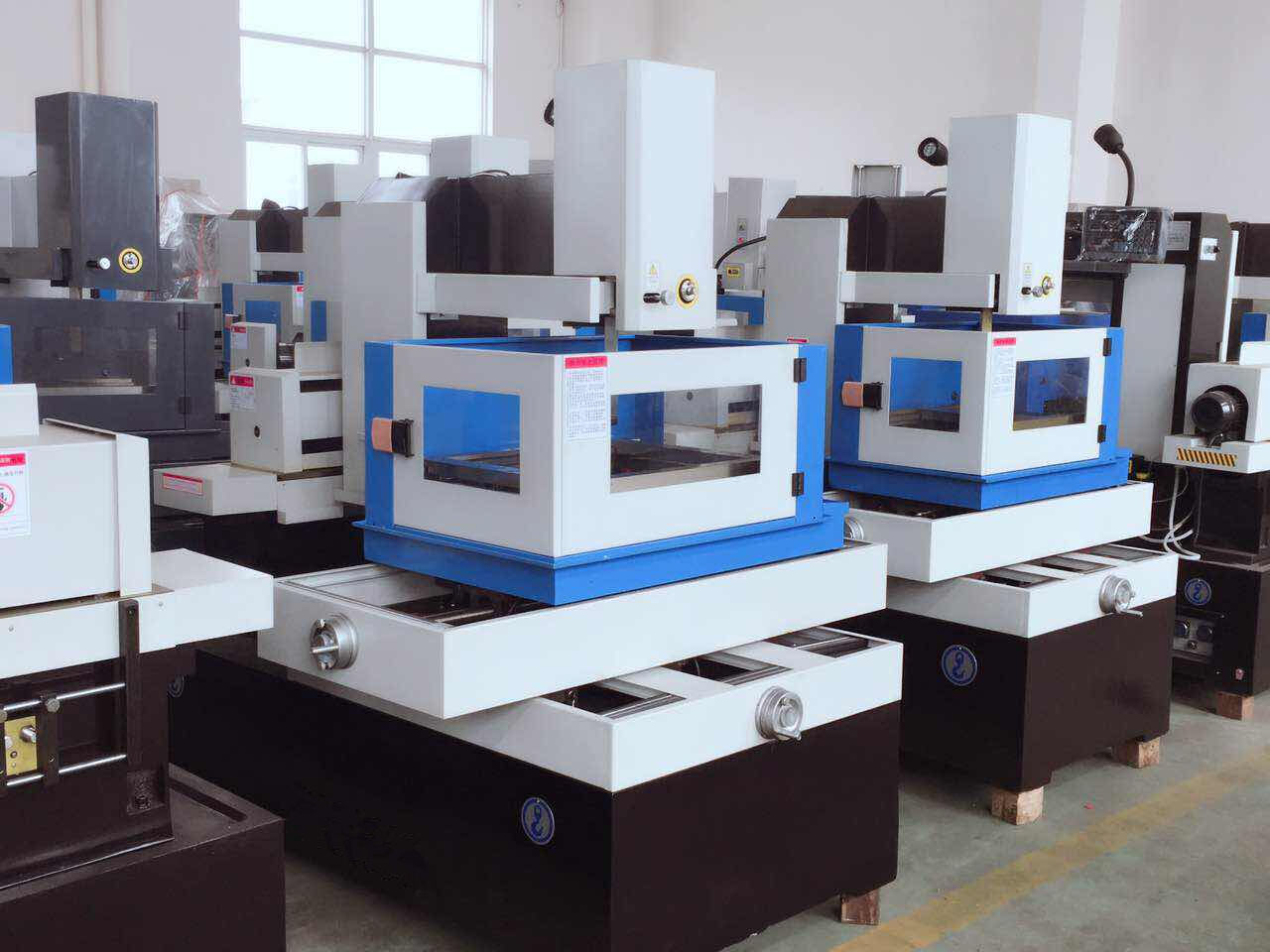
In modern manufacturing environments where precision and throughput must coexist, wire EDM has emerged as one of the most reliable technologies for sustaining high-volume production without compromising dimensional accuracy. As part and component complexity increases across industries such as aerospace, automotive, medical devices, and tooling, manufacturers are under constant pressure to deliver more parts in less time while maintaining tight tolerances. Wire EDM addresses this challenge directly by enabling continuous, repeatable, and highly automated cutting operations that traditional machining methods simply cannot match at scale.
The productivity gains delivered by wire EDM in high-volume settings stem from a combination of automation capability, process stability, and elimination of secondary finishing operations. Understanding how these factors interact gives production engineers and procurement managers a clear picture of why wire EDM is not simply a precision tool, but a genuine throughput multiplier when deployed correctly in a manufacturing workflow. This article explores the specific mechanisms through which wire EDM enhances productivity and explains why its value grows proportionally with production volume.
The Fundamentals of Wire EDM in a Production Context
How Wire EDM Works and Why It Suits Volume Manufacturing
Wire EDM, or wire electrical discharge machining, removes material by generating controlled electrical discharges between a thin, continuously fed wire electrode and the workpiece. The process operates in a dielectric fluid, which flushes debris away and prevents overheating. Because cutting force is essentially zero, wire EDM can process hardened materials, delicate geometries, and complex profiles without distortion or mechanical stress on the part.
In a high-volume production environment, these characteristics translate into consistent part quality across thousands of cycles. Unlike mechanical cutting tools that wear progressively and require frequent recalibration, the wire electrode in wire EDM is continuously renewed, ensuring that the cutting condition remains stable from the first part to the ten-thousandth. This consistency is the foundation upon which all other productivity benefits are built.
The ability of wire EDM to hold tolerances in the range of a few micrometers across an extended production run means that manufacturers can reduce inspection overhead significantly. When a process is inherently repeatable, fewer parts need to be pulled from the line for dimensional verification, which directly reduces non-productive time and keeps throughput rates high.
Material Versatility and Its Impact on Scheduling Efficiency
Wire EDM is effective across an exceptionally wide range of conductive materials, including tool steels, carbides, titanium alloys, copper alloys, and hardened stainless steels. This versatility means that a single wire EDM machine can handle multiple production orders calling for different materials without requiring tool changes, fixture overhauls, or significant setup adjustments.
In a high-mix, high-volume shop, scheduling flexibility is a major productivity driver. When a single machine platform can serve multiple material families, production planners can sequence jobs more efficiently, reduce machine idle time between orders, and respond faster to urgent production demands. Wire EDM delivers this scheduling advantage while maintaining the same level of cut quality regardless of the material being processed.
The combination of material range and process stability means that wire EDM effectively compresses the number of specialized machines a facility needs to invest in, lowering capital expenditure while simultaneously increasing overall production capacity per square meter of shop floor.
Automation Integration and Lights-Out Machining Capability
Unattended Operation as a Productivity Multiplier
One of the most significant ways wire EDM enhances productivity in high-volume production is through its native compatibility with unattended and lights-out operation. Modern wire EDM machines are equipped with automatic wire threading systems that can re-thread the wire after a break without operator intervention. This single feature transforms wire EDM from a supervised process into a near-autonomous production cell.
When a machine can restart itself after a wire break, reload the program for the next part, and continue cutting through overnight shifts or weekend periods, the effective cutting hours per calendar day increase dramatically. For high-volume production scenarios where demand is constant, this extended operational window translates directly into higher output without proportional increases in labor cost.
Facilities that integrate wire EDM into automated pallet systems or robotic workpiece loading solutions achieve an additional layer of productivity. Parts can be loaded into fixtures, cut, unloaded, and transferred to the next process stage without human intervention at each step. This workflow removes the bottleneck created by manual handling and allows wire EDM to function as a continuous production node rather than a batch processing station.
CNC Control and Program Repeatability
The CNC-driven nature of wire EDM means that once a cutting program is validated for a given part geometry, it can be recalled and executed identically on every subsequent run. There is no variability introduced by operator skill, tool wear, or machine drift, which are common sources of inconsistency in conventional machining environments.
In high-volume production, this program repeatability eliminates the ramp-up time typically associated with each new production batch. As soon as a job is queued, wire EDM begins producing conforming parts immediately, without warm-up cycles, test cuts, or incremental adjustments. This readiness shortens lead times and increases the number of productive hours per shift.
Advanced wire EDM controllers also support adaptive cutting strategies that automatically adjust discharge energy, wire tension, and feed rate based on real-time process feedback. These adaptive capabilities prevent wire breaks and surface defects proactively, reducing scrap rates and avoiding the productivity losses associated with rework or rejected parts in a high-volume run.
Eliminating Secondary Operations and Reducing Total Cycle Time
Surface Finish Quality Directly from the Cut
Wire EDM is capable of producing surface finishes that meet final part specifications directly from the cutting process, often eliminating the need for grinding, polishing, or other secondary finishing steps. In high-volume production, every secondary operation adds handling time, machine time, and potential for part damage. By producing finished surfaces in a single setup, wire EDM compresses the total cycle time per part significantly.
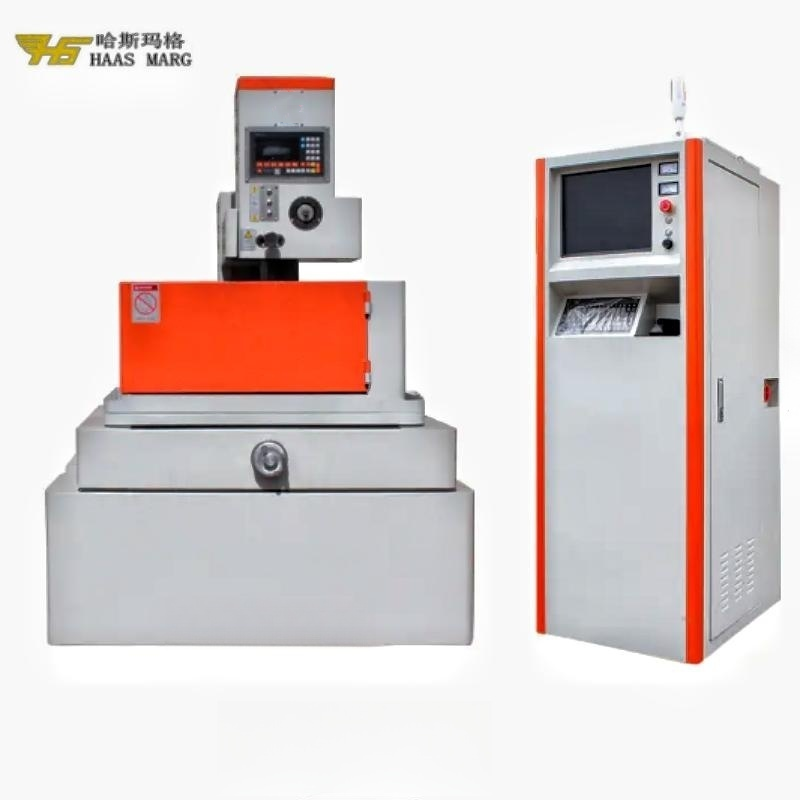
This capability is particularly valuable in the production of precision components such as stamping dies, extrusion tooling, injection mold inserts, and medical implant components, where surface quality requirements are stringent. When wire EDM delivers these surfaces without downstream finishing, the production line moves faster, and fewer workstations are occupied per part, freeing capacity for additional volume.
The thermal nature of wire EDM also means there is no mechanical deformation of the cut surface. Parts cut by wire EDM retain their designed geometry without the springback, burring, or subsurface stress that mechanical cutting can introduce. This dimensional integrity reduces the frequency of corrective operations and contributes to a lower overall defect rate across a high-volume run.
Hard Material Processing Without Pre-Softening
In conventional machining workflows, hardened materials often require annealing before cutting and rehardening afterward, adding two thermal processing steps to the production cycle. Wire EDM cuts hardened materials directly, bypassing this requirement entirely. For high-volume production of tooling components or wear-resistant parts, this elimination of heat treatment cycles represents a substantial reduction in total production time and energy consumption.
The ability to cut in the hardened state also means that dimensional changes caused by heat treatment distortion are avoided, since the part reaches its final geometry after hardening rather than before. This sequence improves first-pass yield rates in high-volume production because the cut geometry reflects the true final condition of the material rather than a pre-hardened approximation.
When a production process can skip pre-softening, heat treatment, and finishing sequences, the throughput increase is compounded across every part in the production run. Wire EDM makes this streamlined workflow achievable for a wide range of industrial components, and the productivity impact scales directly with the size of the production batch.
Process Stability and Quality Consistency at Scale
Maintaining Tolerance Over Extended Runs
Tolerance consistency over a long production run is one of the most demanding requirements in high-volume manufacturing. Wire EDM achieves this consistency by relying on an electrically controlled, non-contact cutting mechanism rather than a physical cutting edge. There is no tool wear to compensate for, no thermal expansion of a tool-workpiece interface, and no progressive degradation of surface geometry over time.
As a result, wire EDM maintains the same dimensional output on part number five hundred as it did on part number one, provided machine temperature and dielectric conditions are managed properly. Modern wire EDM systems include thermal compensation algorithms and dielectric temperature control systems specifically designed to neutralize environmental drift during extended production runs.
This long-run stability reduces the statistical process control burden on quality teams, lowers the frequency of in-process inspection, and minimizes the risk of a tolerance excursion that would require stopping the line to investigate root cause. In high-volume production, each line stop carries a significant opportunity cost, and wire EDM is inherently designed to minimize these events.
Reduced Scrap and Rework Rates
Scrap and rework are direct productivity destroyers in any high-volume environment. Wire EDM contributes to lower scrap rates through its combination of process repeatability, adaptive control, and the absence of mechanical cutting forces that can cause unexpected part failure. When cuts are programmed precisely and executed by a stable, self-monitoring system, the probability of producing a non-conforming part is substantially lower than with many alternative processes.
Lower scrap rates mean that more of the raw material input converts into saleable output, improving both throughput efficiency and cost per part. In a high-volume run, even a one-percent reduction in scrap rate can translate into hundreds of additional conforming parts per shift, which compounds over a full production year into a significant improvement in overall equipment effectiveness.
The non-destructive nature of wire EDM also means that high-value workpiece materials, such as titanium billets or carbide blanks, are not lost to cutting-induced damage. Preserving the integrity of expensive raw materials in a high-volume environment is both a quality and a financial productivity gain that accumulates rapidly across large batch quantities.
Strategic Deployment of Wire EDM in High-Volume Facilities
Cell-Based Manufacturing Integration
For facilities producing high volumes of precision components, integrating wire EDM into a dedicated manufacturing cell yields productivity benefits beyond what a standalone machine can deliver. A cell-based approach groups wire EDM with complementary processes such as sinker EDM, coordinate measuring equipment, and part washing stations, creating a self-contained production unit that processes parts from raw material to finished specification with minimal inter-department transfer time.
Cell integration also enables better queue management, since production planners can route work to the wire EDM cell as a complete workflow rather than scheduling individual machine operations separately. This coordination reduces work-in-process inventory, shortens lead times, and makes production flow more predictable, all of which contribute to higher effective throughput for the facility as a whole.
When wire EDM operates as part of a connected production cell with shared CNC databases and quality data systems, program management becomes centralized and revision control is simplified. This operational coherence reduces the administrative overhead associated with managing a high-volume production floor and allows engineering and quality teams to focus on improvement activities rather than firefighting.
Scaling Wire EDM Capacity to Match Production Demand
One of the practical advantages of wire EDM technology in a high-volume context is that capacity scales predictably and linearly. Adding a second or third wire EDM machine to a production cell doubles or triples cutting capacity without requiring a proportional increase in operator headcount, particularly when automation is in place. This linear scalability makes capacity planning straightforward and reduces the financial risk of expansion decisions.
The standardized nature of wire EDM programming also means that the same cutting programs can be transferred to additional machines with minimal qualification effort. When a new wire EDM machine enters the cell, it can begin producing conforming parts quickly because the process parameters are already validated and the CNC programs are already proven. This fast onboarding of additional capacity is a significant advantage in a high-volume environment responding to growing customer demand.
Facilities that build their high-volume production strategy around wire EDM gain a scalable, automation-ready platform that can grow with their business without requiring fundamental process redesign. The productivity foundation established by wire EDM in the early phases of a production program remains valid and extensible as volumes increase over time.
FAQ
How does wire EDM maintain consistency across thousands of parts in a high-volume run?
Wire EDM uses a continuously renewed wire electrode and a non-contact cutting mechanism, which means there is no tool wear to introduce dimensional drift over time. Combined with adaptive CNC control and thermal compensation systems, wire EDM maintains the same cutting conditions from the first part to the last, delivering consistent tolerances across the entire production run without requiring periodic recalibration.
Is wire EDM suitable for fully automated, lights-out production environments?
Yes. Modern wire EDM machines are designed with automatic wire threading, self-monitoring discharge control, and CNC program queuing capabilities that allow unattended operation over extended periods. When integrated with robotic part loading and unloading systems, wire EDM can function as a continuous, fully automated production node that operates through overnight and weekend shifts without operator supervision.
What types of high-volume components benefit most from wire EDM processing?
Wire EDM delivers the greatest productivity advantage for components that require tight tolerances, complex profiles, or hardened material processing. Stamping dies, injection mold inserts, medical implant components, precision gears, and extrusion tooling are all examples where wire EDM eliminates secondary operations, reduces cycle time, and maintains the dimensional consistency required for high-volume conformance rates.
How does wire EDM reduce total production cost in high-volume manufacturing?
Wire EDM reduces total production cost through several compounding mechanisms: elimination of secondary finishing operations, direct cutting of hardened materials without pre-softening, lower scrap and rework rates, extended unattended operation hours, and reduced inspection overhead due to inherent process repeatability. Each of these factors lowers the cost per part, and the impact grows proportionally as production volumes increase.
Table of Contents
- The Fundamentals of Wire EDM in a Production Context
- Automation Integration and Lights-Out Machining Capability
- Eliminating Secondary Operations and Reducing Total Cycle Time
- Process Stability and Quality Consistency at Scale
- Strategic Deployment of Wire EDM in High-Volume Facilities
-
FAQ
- How does wire EDM maintain consistency across thousands of parts in a high-volume run?
- Is wire EDM suitable for fully automated, lights-out production environments?
- What types of high-volume components benefit most from wire EDM processing?
- How does wire EDM reduce total production cost in high-volume manufacturing?