EN
EN



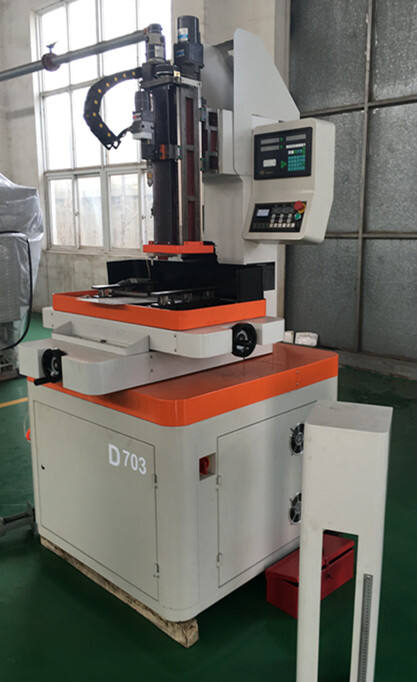
In today's competitive industrial landscape, precision is not a luxury — it is a baseline requirement. EDM machines, or Electrical Discharge Machining systems, have become a cornerstone technology for manufacturers who need to cut, shape, and finish materials with tolerances that conventional cutting tools simply cannot achieve. From aerospace components to medical implants and high-performance tooling, EDM machines are quietly driving some of the most demanding production workflows in modern industry.
Understanding how EDM machines support advanced manufacturing processes requires a closer look at both the underlying physics of electrical discharge and the practical outcomes they deliver on the shop floor. This article breaks down the core mechanisms, key application areas, and the specific ways EDM machines integrate into sophisticated production environments — giving engineers, procurement managers, and manufacturing decision-makers the context they need to evaluate and leverage this technology effectively.
The Core Mechanism Behind EDM Machines
How Electrical Discharge Removes Material
EDM machines operate on a principle that is fundamentally different from conventional subtractive machining. Rather than using mechanical cutting forces, they rely on controlled electrical discharges — rapid, precisely timed sparks — to erode material from a conductive workpiece. Each spark generates an intense localized temperature, typically in the range of 8,000 to 12,000 degrees Celsius, which vaporizes microscopic particles of the workpiece surface.
This process occurs in a dielectric fluid environment, which serves two critical functions: it insulates the gap between the electrode and the workpiece until the discharge threshold is reached, and it flushes away eroded particles to maintain a clean working zone. The result is a machining process that applies virtually no mechanical stress to the workpiece, making EDM machines ideal for fragile, thin-walled, or hardened components that would deform or crack under conventional tool pressure.
The precision achievable through this discharge-based erosion is remarkable. EDM machines can hold tolerances within a few micrometers and produce surface finishes that often eliminate the need for secondary polishing operations. This level of control is what makes them indispensable in advanced manufacturing contexts where dimensional accuracy is critical from the very first part.
Wire EDM Versus Sinker EDM: Distinct Roles in the Process Chain
Within the broader category of EDM machines, two dominant configurations exist: wire EDM and sinker EDM. Each serves a distinct role in advanced manufacturing, and understanding the difference is essential for proper process planning. Wire EDM uses a continuously fed thin wire electrode — typically brass — to cut through a conductive workpiece along a programmed path. This makes it exceptionally well-suited for producing complex 2D profiles, slots, and contours in hardened tool steel, carbide, and other difficult-to-machine alloys.
Sinker EDM, by contrast, uses a shaped electrode — often machined from graphite or copper — that is plunged into the workpiece to create a cavity or impression. This approach is widely used for producing injection mold cavities, die inserts, and intricate internal geometries that cannot be reached with a wire. Both types of EDM machines contribute to advanced manufacturing in complementary ways, and many high-precision facilities operate both configurations as part of an integrated production strategy.
The choice between wire and sinker EDM is rarely arbitrary. It is driven by part geometry, material properties, required surface finish, and downstream assembly requirements. EDM machines in advanced environments are therefore selected and programmed as part of a deliberate process engineering decision, not simply as standalone cutting tools.
How EDM Machines Enable Complex Geometry and Tight Tolerances
Producing Features That Conventional Machining Cannot Reach
One of the most significant contributions EDM machines make to advanced manufacturing is their ability to produce features that are geometrically inaccessible to conventional milling or turning. Internal sharp corners, deep narrow slots, thin ribs, and complex non-circular profiles can all be machined with EDM systems without the geometric limitations imposed by rotating cutting tools. This capability directly expands the design freedom available to engineers working on next-generation components.
In tooling and mold manufacturing, EDM machines are routinely used to create fine detail in hardened steel after heat treatment. Attempting to machine such features before hardening and then heat-treating introduces distortion risk. With EDM machines, the workpiece can be fully hardened first, and then the fine geometry is cut without introducing thermal or mechanical distortion — preserving the dimensional integrity of the final tool.
This post-hardening capability is a major process advantage in advanced manufacturing environments where heat treatment is a mandatory step. It eliminates the rework loop that often occurs when distortion from heat treatment requires re-machining, streamlining the overall production timeline and reducing scrap rates on high-value workpieces.
Maintaining Accuracy Across Repeated Production Runs
Advanced manufacturing is not only about achieving precision on a single part — it is about maintaining that precision consistently across a production run or over repeated setups. EDM machines excel in this regard because their material removal mechanism is inherently consistent. The spark erosion process is governed by electrical parameters — voltage, current, pulse duration, and frequency — that can be precisely controlled and repeated with CNC accuracy.
Modern EDM machines are equipped with adaptive control systems that monitor gap conditions in real time and automatically adjust parameters to compensate for variations in flushing efficiency, electrode wear, and material inconsistencies. This closed-loop control ensures that dimensional outcomes remain stable even as process conditions fluctuate, which is a critical requirement in industries such as medical device manufacturing, where every part must meet specification without exception.
The combination of repeatable electrical parameters and intelligent adaptive control means that EDM machines can be integrated into high-volume advanced manufacturing lines, not just low-volume prototype work. This scalability is an important consideration for facilities planning their long-term machining strategy.
Integration of EDM Machines Into Advanced Manufacturing Workflows
Role in the Broader Process Chain
EDM machines do not typically operate in isolation. In advanced manufacturing facilities, they are positioned strategically within a broader process chain that may include CNC milling, grinding, coordinate measuring, and surface treatment operations. Understanding where EDM machines fit within this chain — and how they interface with upstream and downstream processes — is key to maximizing their contribution.
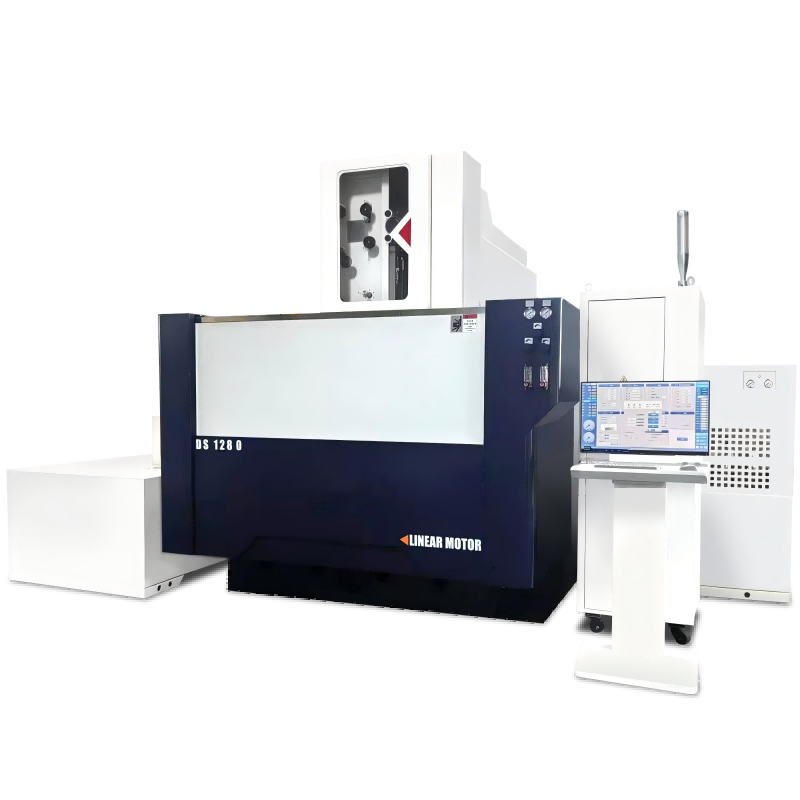
In many cases, EDM machines serve as a finishing or semi-finishing step following rough machining. A component may be roughed out on a machining center, then brought to an EDM machine for final geometry definition or surface quality improvement. In other workflows, particularly in mold and die production, EDM machines handle features that cannot be addressed by milling at all, making them not a substitute for milling but a necessary complement.
Effective integration also requires careful attention to fixturing and datum alignment. EDM machines require the workpiece to be precisely located relative to the machine's coordinate system so that the programmed cutting path aligns accurately with the part's existing features. Advanced manufacturing facilities often invest in standardized pallet and fixture systems to enable rapid, accurate changeovers between EDM machines and other process equipment.
Automation and Unmanned Operation Capabilities
One of the most compelling aspects of modern EDM machines in advanced manufacturing contexts is their capacity for lights-out, unmanned operation. Because the EDM process does not require operator intervention during a cut, and because wire threading and pallet changing can be automated, EDM machines are well-suited to overnight or weekend unmanned production runs. This dramatically increases effective spindle utilization without increasing headcount.
Automated wire threading systems allow EDM machines to restart automatically after a wire break, which is particularly important during unmanned operation. Combined with automatic workpiece loading via robotic arms or pallet changers, advanced manufacturing facilities can configure EDM machines as essentially autonomous machining cells that run through a queue of programmed jobs with minimal human oversight.
The economics of unmanned EDM operation are compelling. Capital-intensive EDM machines that would otherwise sit idle during off-hours contribute productive output around the clock, improving return on investment and compressing lead times. For facilities serving industries with demanding delivery schedules, this operational flexibility can be a significant competitive differentiator.
Material Versatility and Performance in Demanding Applications
Machining Hard and Exotic Materials
Advanced manufacturing increasingly demands the ability to work with materials that push the limits of conventional machining. Hardened tool steels, tungsten carbide, titanium alloys, Inconel, polycrystalline diamond, and various advanced ceramics are all materials where conventional cutting tools struggle or fail entirely. EDM machines, by contrast, are largely indifferent to material hardness — as long as the workpiece is electrically conductive, the spark erosion mechanism operates effectively regardless of hardness.
This material agnosticism is one of the defining advantages of EDM machines in advanced manufacturing. A single wire EDM machine can process fully hardened H13 tool steel at 52 HRC just as readily as it processes annealed mild steel, without requiring tool changes, speed adjustments, or special cutting strategies. This simplifies process planning and reduces the number of specialized machine tools a facility needs to maintain.
For aerospace and defense applications involving nickel superalloys and refractory metals, EDM machines provide a reliable path to complex geometry that would otherwise require grinding — a slower and more expensive finishing process. The ability to machine these materials with EDM machines reduces overall cycle time and opens up design possibilities that engineers might otherwise avoid due to manufacturability concerns.
Surface Integrity and Post-Process Considerations
While EDM machines produce excellent dimensional accuracy, the spark erosion process does create a thin heat-affected zone on the machined surface, sometimes referred to as the recast layer. In most general manufacturing applications, this layer is thin enough to be inconsequential. However, in advanced manufacturing applications involving fatigue-critical components — such as turbine blades or structural aerospace parts — the recast layer must be considered and, if necessary, removed through a finishing operation such as electrochemical machining or fine grinding.
Modern EDM machines offer fine-finishing modes that significantly reduce the depth and density of the recast layer, often making it acceptable for demanding applications without additional processing. The key is selecting the appropriate cutting conditions for the intended application, which requires process knowledge and experience. Advanced manufacturing facilities that use EDM machines extensively typically develop detailed process sheets specifying cutting parameters, finishing passes, and post-process inspection criteria for each critical part type.
Understanding these surface integrity considerations does not diminish the value of EDM machines — it contextualizes them. When used with appropriate process awareness, EDM machines deliver surfaces and geometries that are fit for purpose in even the most demanding advanced manufacturing environments.
Strategic Value of EDM Machines in Manufacturing Operations
Supporting Design-for-Manufacturability at the Engineering Level
The presence of EDM machines in a manufacturing facility changes what engineers can put on a drawing. When designers know that EDM capability is available, they can specify tighter tolerances, sharper internal radii, and more complex three-dimensional profiles without concern that the shop floor cannot achieve them. This feedback loop between available process capability and design ambition is one of the less-discussed but highly significant ways EDM machines support advanced manufacturing.
In collaborative product development environments, manufacturing engineers who understand EDM machine capabilities can proactively advise design teams during the concept and detail design phases. By flagging features that would benefit from EDM machining, or by suggesting design modifications that make EDM more efficient, they help produce parts that are not only functionally superior but also more economical to manufacture.
This design-manufacturing alignment is a hallmark of mature advanced manufacturing organizations. EDM machines are part of the enabling infrastructure that makes such alignment possible, giving engineers the confidence to design to function rather than to the limitations of available tooling.
Long-Term Operational and Economic Considerations
Investing in EDM machines is a long-term commitment that requires consideration beyond the initial purchase price. Consumable costs — wire, electrodes, dielectric fluid, and filters — must be factored into the total cost of ownership. Maintenance requirements, software licensing for CAM systems capable of generating EDM programs, and operator training are all part of the economic equation.
However, the return on that investment is measured not only in direct machining cost per part but in the broader value EDM machines deliver to the operation: reduced scrap on hard materials, elimination of rework after heat treatment, capability to win contracts requiring tolerances beyond competitor capacity, and flexibility to machine new materials as product designs evolve. For advanced manufacturing facilities, these strategic benefits often justify the investment even when the direct cost-per-part comparison with conventional machining is less straightforward.
Facilities that view EDM machines as strategic assets rather than commodity equipment tend to invest more seriously in operator training, process documentation, and machine maintenance — and they consistently get better performance and longer machine life as a result. The technology rewards disciplined operation with outstanding reliability and output quality.
FAQ
What types of materials can EDM machines process effectively?
EDM machines can process any electrically conductive material, regardless of hardness. This includes hardened tool steels, tungsten carbide, titanium alloys, nickel superalloys such as Inconel, and many other advanced engineering materials. The electrical discharge mechanism is not affected by material hardness, which is a key advantage over conventional cutting processes that require softer materials or special tooling for hard metals.
How do EDM machines maintain precision over repeated production runs?
Modern EDM machines use CNC-controlled electrical parameters combined with adaptive control systems that monitor and adjust the spark gap conditions in real time. This closed-loop approach ensures that cutting conditions remain stable even as variables like electrode wear and fluid contamination change over time. The result is consistent dimensional output across extended production runs, which is essential for industries with zero-defect quality requirements.
Can EDM machines be integrated into automated manufacturing cells?
Yes. Modern EDM machines are well-suited to automation and unmanned operation. Automated wire threading systems allow them to recover from wire breaks without operator intervention, and pallet or robotic loading systems enable lights-out production over extended periods. This makes EDM machines a viable component of fully automated advanced manufacturing cells, particularly for facilities that need to maximize machine utilization without increasing labor costs.
What is the difference between wire EDM and sinker EDM in advanced manufacturing contexts?
Wire EDM uses a continuously fed wire electrode to cut complex 2D profiles and contours through a workpiece, making it ideal for punches, dies, and precision parts with intricate outlines. Sinker EDM uses a shaped electrode to create cavities and impressions, and is primarily used for mold cavities, die inserts, and internal features with complex three-dimensional geometry. Both types of EDM machines serve distinct and complementary roles in advanced manufacturing, and many facilities operate both configurations as part of an integrated process strategy.