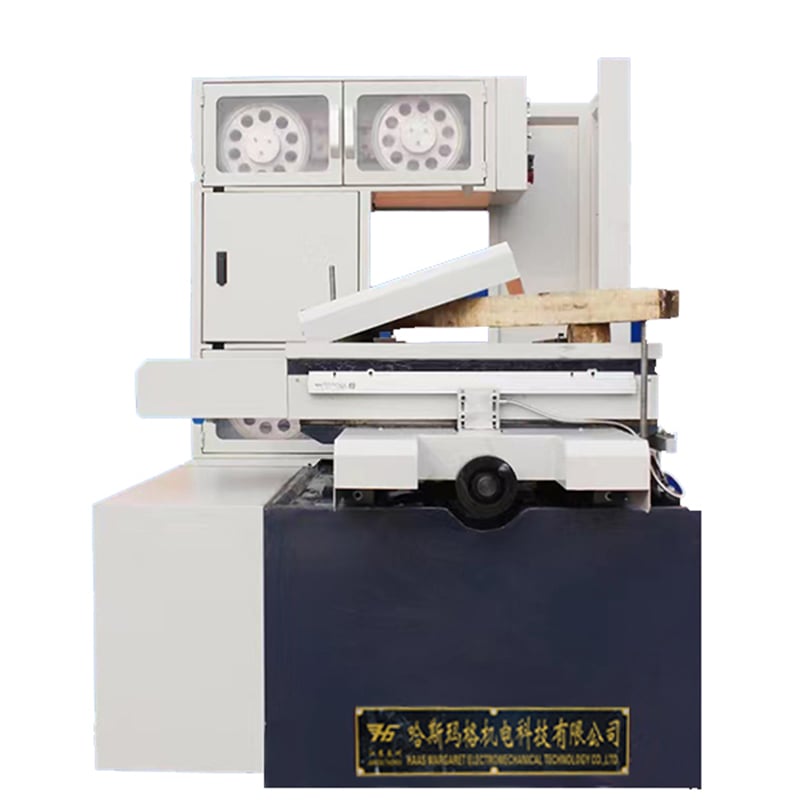
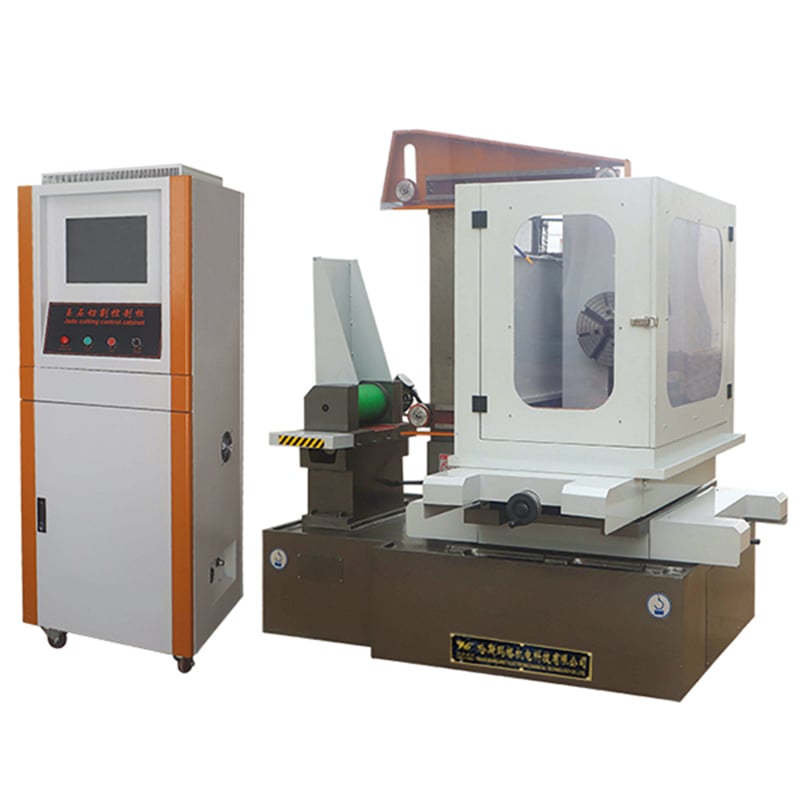
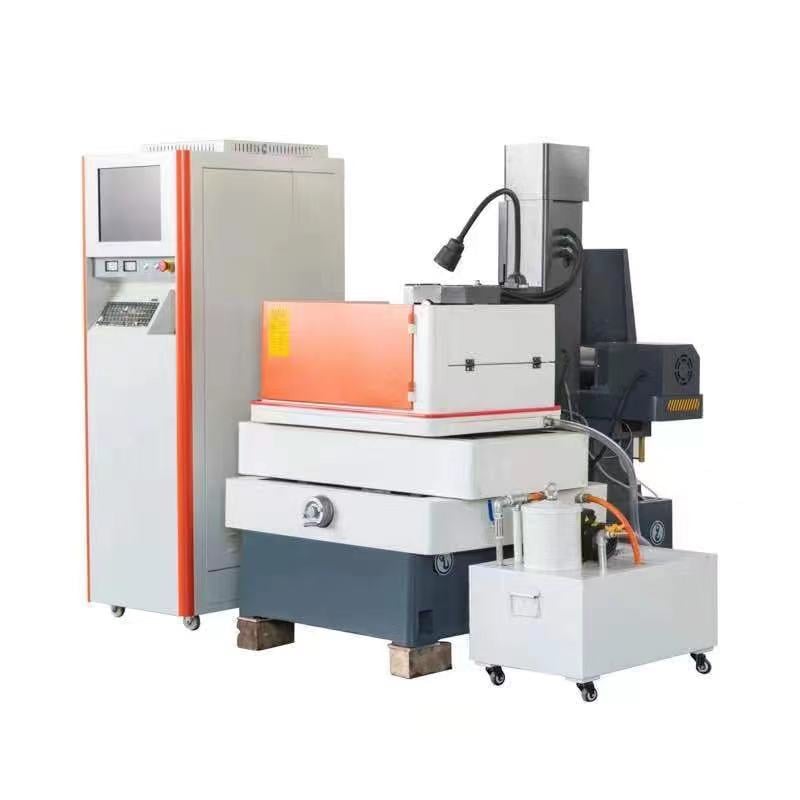
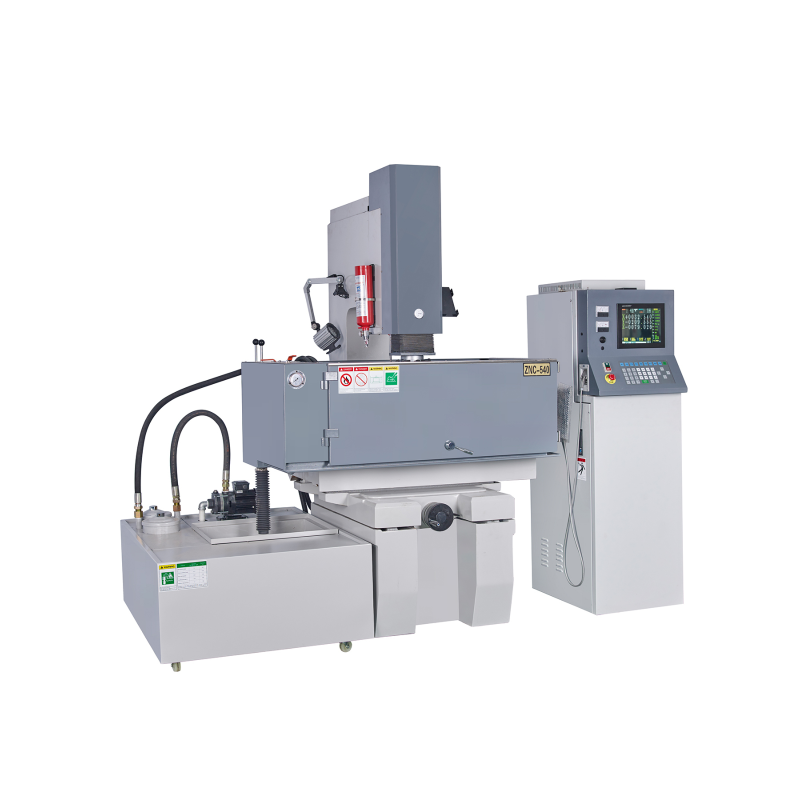
Wire Electrical Discharge Machining (Wire EDM / WEDM) is a precision non-traditional machining process for conductive materials. It employs a continuously moving metal electrode wire as the tool electrode, establishes controlled pulsed spark discharge between the electrode wire and the workpiece, and removes workpiece material through the instantaneous high temperature generated by the discharge, thereby achieving precision cutting of conductive materials.
In terms of the trajectory control method for electrode wire machining, three typical forms have been developed over the technological evolution of wire EDM machines: tracer control, photoelectric tracing control and CNC (Computer Numerical Control) control. With the advancement of numerical control technology, CNC control has become the mainstream control method for modern wire EDM machines.
Tracer control is one of the earliest trajectory control methods applied in wire EDM machining.
Prior to machining, a master template matching the workpiece contour must be fabricated in advance. During machining, the tracer mechanism follows the contour of the master template, and controls the movement of the worktable and workpiece relative to the electrode wire through mechanical or servo linkage mechanisms, so that the electrode wire completes the cutting along the predetermined contour.
This method features an intuitive control principle and a relatively simple machining process. When identical or similar contours need to be machined repeatedly, the finished master template can be reused.
However, tracer machining imposes high requirements on the manufacturing accuracy and mounting accuracy of the master template itself, as well as the precision of the mechanical tracer mechanism. In addition, machining workpieces of different shapes usually requires corresponding master templates, resulting in heavy preparation work and relatively limited flexibility.
Photoelectric tracing control is a control method developed on the basis of tracer control. It mainly uses photoelectric detection technology to identify and trace the pattern contour.
Before machining, a photoelectric tracing pattern is drawn or fabricated at a certain scale according to the part drawing. During operation, the pattern is mounted on the photoelectric tracing device, and the photoelectric detector head traces along the pattern contour. The detected position information is converted into control signals, which drive the machine worktable through electrical, mechanical or servo linkage mechanisms, so that the workpiece is machined along the pattern contour relative to the electrode wire.
Compared with tracer control, the photoelectric tracing method replaces precision master templates with patterns, and improves the convenience of contour detection and control by enlarging the pattern. Therefore, it had certain advantages in early machining of complex contours and small parts.
Nevertheless, this control method still requires preparation of corresponding tracing patterns, and is affected by factors such as photoelectric detection accuracy, pattern quality and mechanical transmission accuracy. With the development of numerical control technology, its application has been gradually replaced by the more flexible CNC control method.
CNC control is the primary trajectory control method for modern wire EDM machines.
CNC wire EDM machining does not require traditional master templates, nor does it rely on enlarged patterns for photoelectric tracing. Machining personnel usually establish machining geometry data based on part drawings, and generate CNC machining programs through programming or relevant CAM software. The CNC system of the machine controls the movement of X, Y and other axes along the set trajectory according to the geometric path and machining parameters in the program, and completes the wire EDM process in coordination with the pulse power supply, wire feed system, dielectric system and other subsystems.
Compared with traditional tracer and photoelectric tracing methods, CNC control has the following advantages:
It should be noted that the final accuracy of wire EDM machining does not depend solely on the CNC system. Factors such as the mechanical accuracy of the machine base, servo system performance, electrode wire running status, discharge parameters, workpiece material and thickness, dielectric condition and temperature stability all affect machining accuracy. Therefore, evaluating the machining capability of a CNC wire EDM machine requires a comprehensive investigation of its mechanical accuracy, control system, pulse power supply and overall process performance.
From the perspective of technological development, tracer control, photoelectric tracing control and CNC control represent different development stages of wire EDM trajectory control technology.
Control Method |
Core Feature |
Advantages |
Limitations |
Tracer Control |
Traces along the master template contour |
Intuitive principle; reusable master template |
Requires custom master template; low flexibility |
Photoelectric Tracing Control |
Traces pattern via photoelectric device |
Replaces precision master template with pattern |
Requires tracing pattern; accuracy limited by detection and mechanical system |
CNC Control |
Controls machine movement via digital program |
High automation, flexible machining, suitable for complex contours |
Higher requirements for CNC system, machine accuracy and process performance |
The trajectory control technology of wire EDM machines has evolved from tracer control and photoelectric tracing control to digital CNC control. Early tracer and photoelectric tracing methods played an important role in the development of wire EDM technology. With the advancement of computer technology, numerical control technology and CAD/CAM technology, CNC control has gradually become the dominant control method for modern wire EDM machines.
At present, CNC wire EDM machines have been widely used in mold manufacturing, precision parts processing, aerospace, automotive, electronics and other precision manufacturing fields. For practical machining, the control method is only one of the factors affecting machining performance. Only when the machine structural accuracy, CNC system, pulse power supply, electrode wire feed system and machining process parameters are properly matched can stable machining accuracy and surface quality be achieved.
 Hot News
2026-11-18
2026-11-11
2026-11-04
2026-10-28
2026-10-21
2026-09-16

 EN