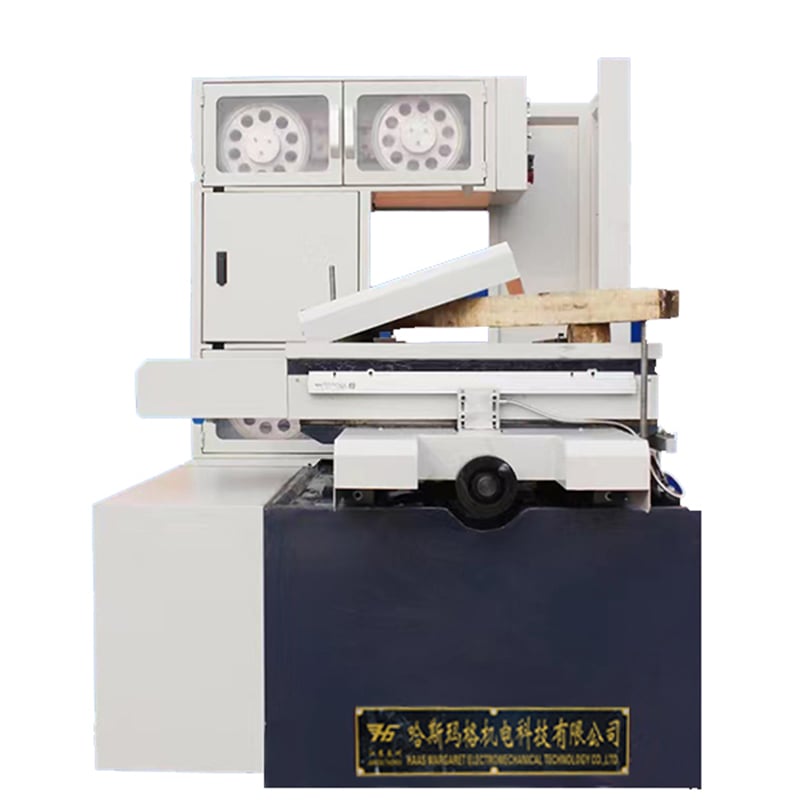
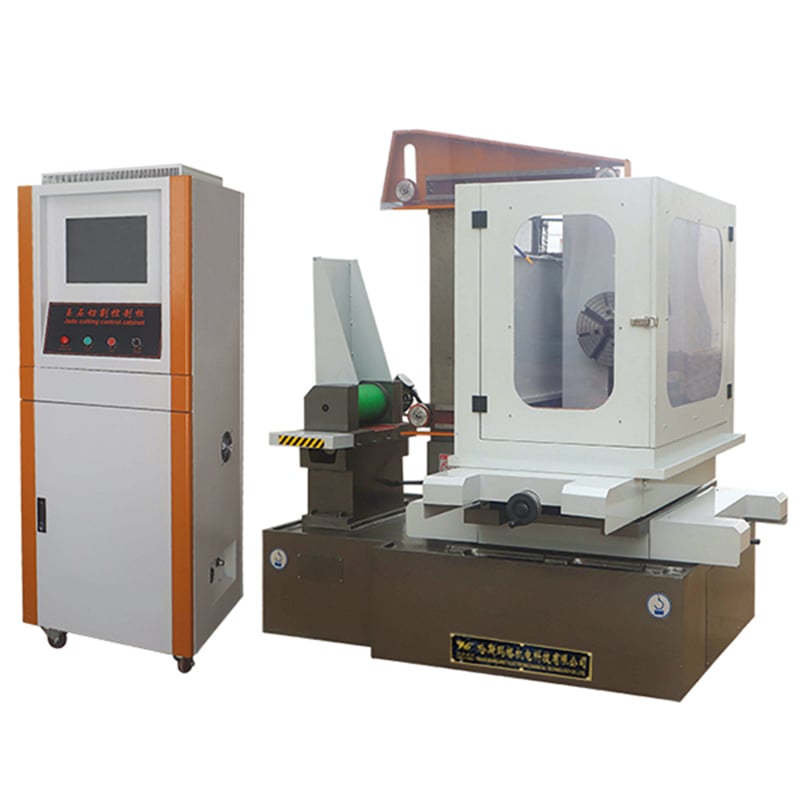
Large-thickness wire electrical discharge machining (WEDM) is one of the most demanding applications in the EDM process. In sectors like mold manufacturing and heavy machinery fabrication, operators consistently face pain points such as unstable discharge, frequent short circuits, wire breakage and inferior surface quality when cutting steel workpieces over 200mm thick, along with thick stock of specialty materials including red copper, cemented carbide, pure tungsten and pure molybdenum. This article breaks down the core obstacles of large-thickness cutting across pulse power, dielectric fluid circulation, electrode wire performance and workpiece preparation, and delivers a systematic set of actionable optimization strategies to reduce downtime risks and boost both productivity and finish quality for thick-part machining.
A widespread misconception in the industry is that the maximum opening height of a machine’s wire guide frame equals its actual large-thickness machining capacity. In reality, the guide frame only defines the maximum workpiece size the machine can accommodate, not its ability to perform stable cutting. As workpiece thickness increases, the machining environment inside the kerf deteriorates progressively, with multiple interrelated factors driving up processing difficulty.
Poor dielectric fluid penetration and low debris evacuation efficiency are the primary issues. The thicker the workpiece, the deeper the cutting kerf, which makes it far harder for dielectric fluid to reach the core machining zone and complete full circulation. Without timely flushing of erosion debris out of the discharge gap, the gap recovers its insulating state very slowly, making continuous short circuits highly likely.
Accumulated erosion debris directly disrupts normal discharge. Conductive particles built up inside the kerf degrade the insulating performance of the discharge gap, preventing pulse voltage from building up properly and reducing the ratio of effective discharges. This leads to steadily declining machining stability, and in severe cases, sustained arcing, molybdenum wire burn damage and even wire breakage.
Molybdenum wire has a finite current-carrying capacity. The current load a molybdenum wire can handle is limited by its diameter, travel speed and cooling conditions. Blindly cranking up pulse current and single-pulse energy to chase higher machining efficiency will cause excessive temperature rise in the wire, accelerating wear and significantly raising the risk of breakage.
Excessively long debris evacuation paths in deep kerfs cause local buildup. In large-thickness operations, the middle section of the kerf is far from the external dielectric circulation zone, creating much higher resistance for debris removal. Local debris buildup easily occurs, triggering localized discharge abnormalities that leave streaks, grooves and burn marks on the cut surface.
Material residual stress and uneven microstructure also amplify machining risks. Large-format workpieces often have non-uniform internal structure, inclusions and residual stress. Stress release during cutting causes material deformation, which narrows the kerf locally, jams the electrode wire and leads to short circuits and wire sticking faults.
To address the above challenges, comprehensive adjustments across power parameters, fluid systems, mechanical operation, process strategies and workpiece pre-treatment are required to achieve reliable large-thickness machining.
Optimize pulse parameters to increase effective single-pulse energy. By fine-tuning pulse voltage, peak current and pulse width, operators can boost the material removal capacity of each effective discharge. A properly matched pulse interval should also be set aside to allow sufficient time for dielectric deionization and debris flushing. All parameter adjustments must respect the load limit of the molybdenum wire to avoid breakage from energy overload.
Upgrade the dielectric fluid system for enhanced circulation and filtration. Select dielectric fluids with strong insulating performance, deionization capability and debris carrying capacity, and optimize fluid delivery methods and nozzle design to improve fluid exchange efficiency deep inside the kerf. Routine maintenance should ensure unobstructed filtration systems and supply lines to keep dielectric fluid clean.
Set pulse voltage appropriately to improve breakdown conditions. Moderately raising pulse voltage helps optimize discharge breakdown and improves arc initiation stability for thick workpieces, but it must be coordinated with pulse current, pulse width and servo tracking parameters — higher voltage alone cannot resolve debris evacuation issues.
Perform proper workpiece pre-treatment to release residual stress in advance. Based on the workpiece material, apply processes such as forging, annealing or aging treatment to refine internal microstructure and reduce residual stress. For workpieces with large stock allowance, pre-machining can remove excess material and release internal stress ahead of time, reducing deformation and wire jamming risks during final cutting.
Improve wire travel stability with optimized speed and tension. Moderately increasing wire travel speed refreshes the electrode wire surface faster and improves its dielectric fluid entrainment effect. At the same time, smooth operation of the wire transport mechanism must be ensured to minimize wire vibration and tension fluctuation, boosting machining stability on the mechanical side.
Refine feed control strategies to proactively improve gap conditions. Based on real-time machining status, adopt control modes such as zigzag feed, intermittent feed or alternating forward/retract feed to actively adjust the discharge gap state. This creates more space for dielectric fluid entry and debris discharge, effectively reducing the occurrence of short circuits and wire breakage.
Large-thickness wire EDM is an integrated technology, whose core difficulty lies in maintaining a stable discharge state, delivering effective discharge energy consistently, and removing erosion debris from the kerf in a timely manner.
Improving large-thickness cutting capability cannot rely solely on increasing machine travel height. It requires systematic optimization across pulse power supply, dielectric fluid circulation, electrode wire operation and machining processes. Only when all links are properly matched can short circuit and wire breakage risks be effectively reduced, and both machining efficiency and surface quality of large-thickness workpieces be ultimately improved.
 Hot News
2026-11-04
2026-10-28
2026-10-21
2026-09-16
2026-09-09
2026-09-02

 EN