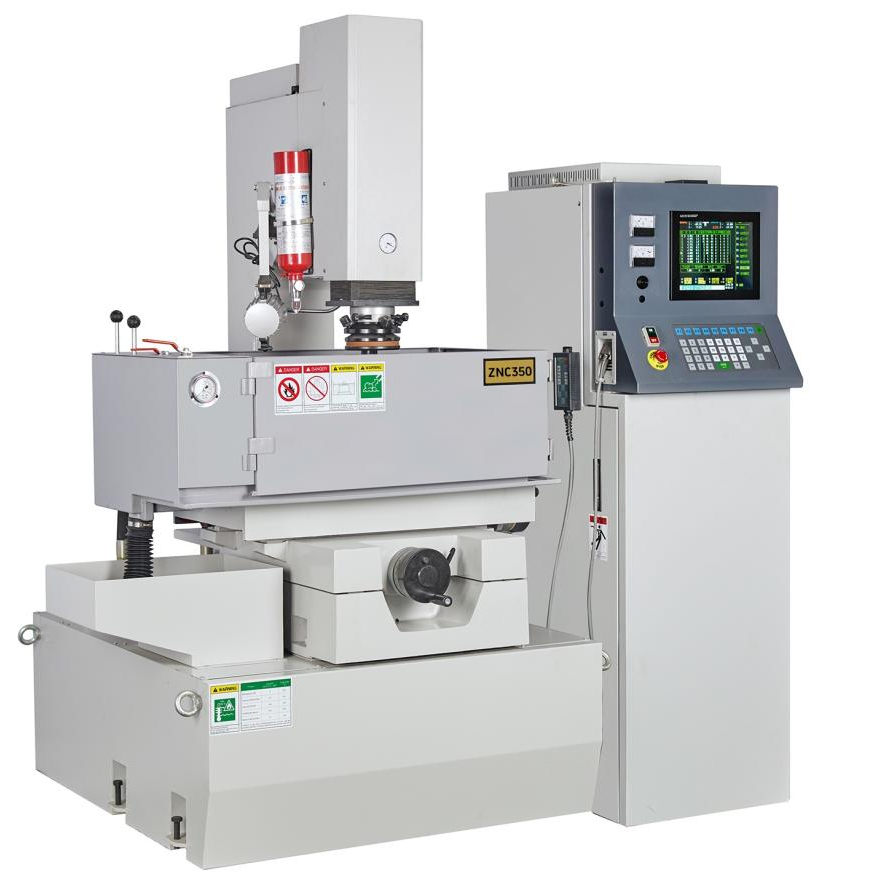
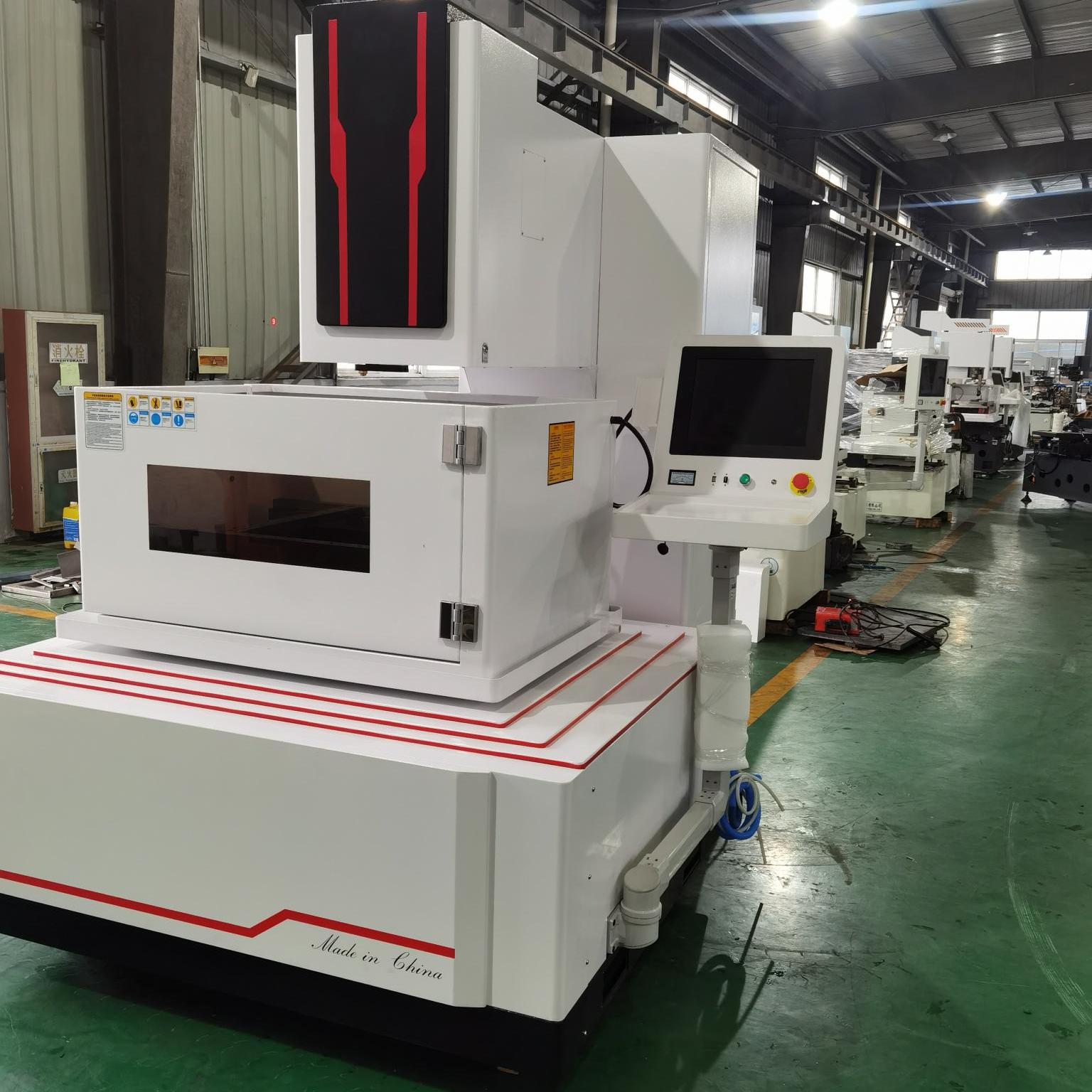
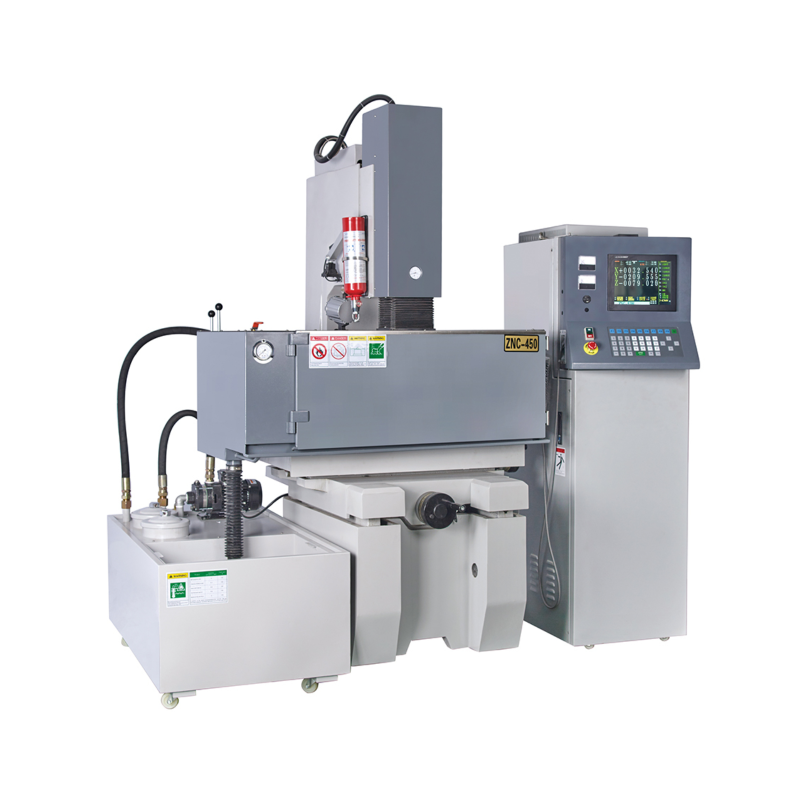
In modern precision manufacturing and non-traditional machining, Small Hole Drilling EDM (Electrical Discharge Machining, also known as hole poppers or fine-hole discharge machines) plays a pivotal role. From wire-threading holes in deep dies, vent holes in injection molds, and spinnerets in the synthetic fiber industry, to fuel injection nozzles in automotive systems and film cooling holes in aerospace turbine blades, small hole drilling EDM serves as core, essential equipment for machining micro-holes in high-hardness materials with high aspect ratios.
Small hole drilling EDM differs fundamentally from traditional mechanical drilling, which relies on physical tool cutting. Its core is built upon non-contact electrical discharge erosion (Electrical Discharge Machining).
During actual machining, the equipment connects the negative terminal of a high-frequency pulse power supply to a high-speed rotating hollow tube electrode (typically made of brass or copper) and the positive terminal to the workpiece. Under the precise drive of a CNC servo system, a dynamic micro-gap (typically 0.01 mm to 0.05 mm) is continuously maintained between the electrode tip and the microscopic high points on the workpiece surface.
When the pulse voltage breaks down the dielectric fluid between the electrode and the workpiece, an extremely fine spark discharge channel forms in the gap. The instantaneous plasma temperature inside the discharge channel reaches 8,000°C to 12,000°C, and its extremely high energy density causes the local metal to instantaneously melt or even vaporize within microseconds.
Simultaneously, a high-pressure rotary head mounted on the spindle forces high-pressure deionized water (or specialized water-based working fluid) at pressures of 5 MPa to 10 MPa out through the inside of the hollow electrode tube. Coupled with the high-speed rotation of the electrode driven by the spindle at hundreds to thousands of RPM, this flushing action not only cools the discharge zone but, more importantly, forcefully flushes the molten electrical discharge debris out of the extremely narrow gap, preventing secondary discharge and electrode binding.
Because the entire erosion process relies entirely on converting electrical energy into thermal energy, there is no physical contact between the tool electrode and the workpiece. Consequently, the machining process generates zero mechanical cutting force. This physical characteristic allows small hole drilling EDM to effortlessly penetrate any highly conductive material—such as hardened steel, carbide, titanium alloys, and nickel-based superalloys (Inconel)—without causing mechanical stress deformation or leaving cutting burrs on thin-walled components.
In industrial micro-hole manufacturing, common technical routes include small hole drilling EDM, traditional mechanical drilling, and modern laser drilling. These three processes exhibit distinct differences in machining mechanisms, scope of application, and physical characteristics.
Compared to traditional mechanical drilling, mechanical drilling relies heavily on the hardness and rigidity of the cutting tool itself. When facing hard-to-machine materials like hardened steel or superalloys, mechanical drill bits suffer from severe wear or breakage. As hole depth increases, chip evacuation becomes extraordinarily difficult, limiting the aspect ratio to within 20:1, while cutting forces tend to warp thin-walled workpieces. In contrast, small hole drilling EDM eliminates material hardness constraints entirely, efficiently processing any material as long as it is electrically conductive. Due to the absence of cutting forces, it offers a massive advantage in thin-walled parts, and under the synergy of adaptive peck-feed and high-pressure flushing mechanisms, it reliably achieves aspect ratios of 20:1 to 100:1 in standard industrial production—reaching up to 200:1 under extreme parameters on high-end CNC equipment. However, mechanical drilling achieves higher pure material removal rates on soft metals (such as aluminum alloys or unhardened steel), leaving a hole wall entirely free of a heat-affected zone (HAZ).
Compared to laser drilling, laser drilling uses high-energy-density light beams to melt or vaporize material. Its greatest advantage lies in its extremely fast processing speed and its ability to machine both conductive and non-conductive insulating materials (such as ceramics and composites), with minimal heat impact when using ultrafast lasers (picosecond/femtosecond). However, when drilling deep holes in thick plates, lasers suffer from beam focusing and defocusing issues, leading to significant exit taper and non-straight hole walls, alongside high equipment investment and maintenance costs. By comparison, small hole drilling EDM utilizes the guidance of the electrode tube and adaptive gap control to deliver superior stability and cost-effectiveness in penetrating thick plates, ensuring hole straightness, and controlling diameter consistency. Nevertheless, it must be objectively noted that EDM leaves a microscopic, ultra-thin recast layer and micro-cracks on the hole wall, and the tool electrode experiences wear during processing, requiring compensation algorithms to correct dimensions.
Evaluating the overall performance and machining precision of a small hole drilling EDM machine requires looking beyond the structural frame to perform an in-depth technical assessment of its four core modules:
High-Frequency Pulse Power Supply and Intelligent Adaptive Control System The pulse power supply serves as the "heart" of the equipment, directly determining machining efficiency, surface roughness, and electrode wear rates. Advanced pulse power supplies feature digital high-frequency discharge control and integrate short-circuit detection with adaptive high-frequency peck-feed flushing algorithms. When debris accumulation in the gap causes an abnormal voltage drop, the control system instantly adjusts the pulse width or drives the spindle to retract rapidly, flushing out debris before resuming feed, thus preventing arc burning on the workpiece.
High-Pressure Rotary Spindle Head The spindle rotary head is the most critical mechatronic component in a small hole drilling EDM machine. It must maintain an absolute seal while enduring high-pressure water flow impacts of 5 MPa to over 10 MPa at high rotational speeds, while simultaneously ensuring stable conduction of high-frequency pulse currents to the rotating electrode. The wear resistance and pressure tolerance of the seals, along with the contact stability of the conductive carbon brushes, directly dictate the machine's long-term continuous operation stability and deep-hole drilling capabilities.
High-Pressure Deionized Water Line and Fine Filtration System Small hole drilling EDM primarily uses deionized water as the dielectric and flushing medium. The conductivity of the working fluid is crucial for focusing discharge energy and restoring gap insulation. A comprehensive system must include high-pressure water pumps, deionizing resin exchange columns, and multi-stage micron filtration elements to ensure the circulating fluid maintains high purity and appropriate conductivity, preventing micro-debris from causing secondary discharge or clogging the electrode tube.
Multi-Axis CNC Linkage and Automation Integration For simple single-hole or wire-threading hole machining, single-axis CNC or manual machines suffice. However, for complex film cooling holes in aero-engine blades (involving compound angle holes and 3D spatial arrays) or multi-hole molds, 3-axis or 5-axis linkage (CNC) systems are essential. Combined with automatic edge finding, automatic tool setting, automatic tool changers (ATC), and gap discharge monitoring systems, these features minimize operator error and enable unattended, highly consistent precision production.
As manufacturing advances toward precision, miniaturization, and intelligence, small hole drilling EDM continues to iterate technically. Breakthroughs in micron-level discharge control are pushing hole diameters smaller (e.g., below $\varnothing$0.1 mm) while effectively curbing recast layer thickness. Meanwhile, integrating this equipment with industrial robotics and automated loading/unloading systems is driving this traditional non-traditional machining technology into fully automated flexible manufacturing systems (FMS).
Leveraging its non-contact processing, independence from material hardness, and ultra-high aspect ratio capabilities, small hole drilling EDM remains an indispensable "micro-hole specialist" in modern manufacturing engineering. In-depth understanding of its discharge physics, objective evaluation of its performance relative to other processes, and precise selection of matching technical configurations form the key foundation for enterprises to guarantee complex part quality and enhance core manufacturing competitiveness.
 Hot News
2026-09-16
2026-09-09
2026-09-02
2026-08-26
2026-08-19
2026-08-13

 EN
EN