EN
EN


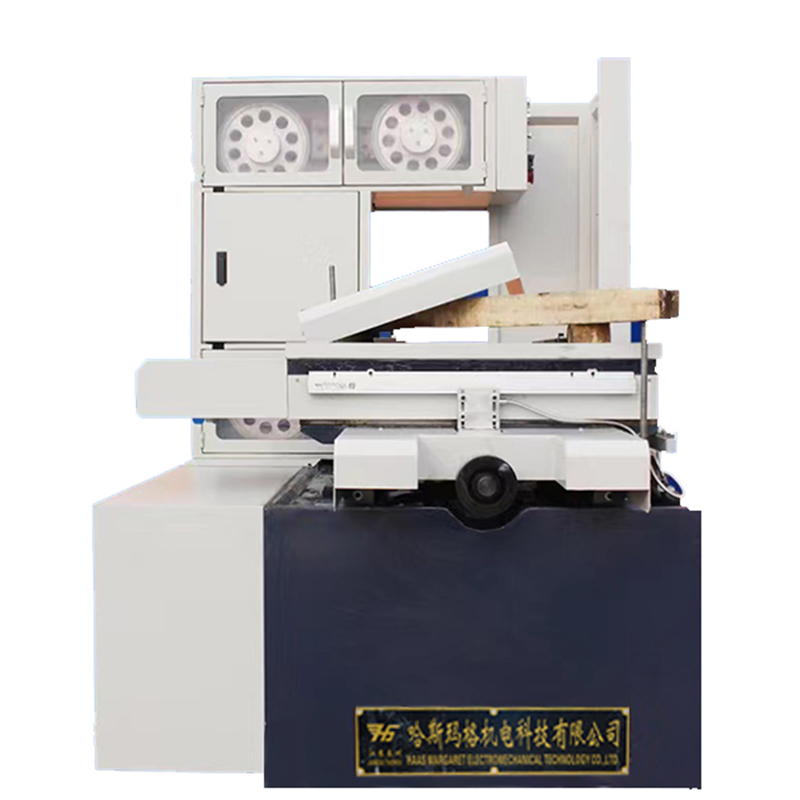
Manufacturing precision and surface quality remain critical factors in modern industrial production, particularly when working with hardened metals, intricate geometries, and tight tolerance requirements. When engineers and production managers seek methods to achieve mirror-like surface finishes on complex metal components, the question naturally arises: how does a wire cutting machine achieve smooth surface finishes? The answer lies in the sophisticated interplay of electrical discharge machining principles, electrode wire characteristics, dielectric fluid dynamics, and precise motion control systems that work together to produce exceptionally refined surface textures without mechanical contact or tool wear.
Unlike traditional machining methods that rely on cutting tools physically contacting the workpiece, a wire cutting machine employs electrical discharge erosion to remove material atom by atom through controlled spark discharges. This fundamental difference in material removal mechanism enables the production of surface finishes that range from standard industrial grades to near-polished mirror finishes, depending on parameter optimization and process control strategies. Understanding the specific mechanisms, variables, and technological features that enable smooth surface generation is essential for manufacturers who demand both geometric accuracy and superior surface quality in their precision components.
The Electrical Discharge Erosion Mechanism Behind Surface Quality
Understanding Spark Discharge Characteristics in Wire EDM
The foundation of smooth surface finishes produced by a wire cutting machine resides in the nature of electrical discharge machining itself. When voltage is applied between the continuously moving wire electrode and the workpiece, separated by a dielectric fluid gap, controlled electrical discharges occur at intervals measured in microseconds. Each individual spark creates a tiny crater on the workpiece surface by melting and vaporizing a minute volume of material. The cumulative effect of millions of these microscopic craters determines the final surface texture, and the key to achieving smooth finishes lies in minimizing crater size and depth while maximizing crater overlap and uniformity.
During the discharge process, the plasma channel that forms between the wire electrode and workpiece reaches temperatures exceeding ten thousand degrees Celsius in localized zones. This extreme heat causes instantaneous melting and vaporization of the workpiece material, while the surrounding dielectric fluid rapidly cools and flushes away the eroded particles. A wire cutting machine achieves smooth surface finishes by precisely controlling the energy of each discharge through adjustment of electrical parameters including pulse duration, pulse interval, peak current, and open-circuit voltage. Lower energy discharges create smaller craters with shallower depths, resulting in finer surface textures but slower material removal rates.
Material Removal Rate Versus Surface Finish Trade-offs
The relationship between cutting speed and surface quality represents a fundamental consideration in wire electrical discharge machining operations. Rough cutting passes typically employ higher discharge energies with longer pulse durations and higher peak currents to maximize material removal efficiency. These aggressive parameters produce faster cutting speeds but generate larger discharge craters, resulting in rougher surface finishes with visible texture patterns. However, a well-programmed wire cutting machine achieves smooth surface finishes through multi-pass cutting strategies that begin with rough cuts for bulk material removal, followed by progressively finer finish passes with optimized electrical parameters.
During finishing passes, the wire cutting machine operates with significantly reduced discharge energies, often one-tenth or less of the rough cutting power levels. These reduced energy discharges create much smaller craters with depths measured in micrometers or even sub-micrometer ranges. The finishing process typically involves two to four separate passes along the same cutting path, with each successive pass further refining the surface by removing the peaks left by previous operations. Modern wire cutting machine control systems automatically adjust dozens of parameters between passes, including discharge frequency, servo feed rate, wire tension, and dielectric flushing pressure to optimize surface quality while maintaining dimensional accuracy.
The Role of Discharge Frequency and Pulse Control
Discharge frequency directly influences how a wire cutting machine achieves smooth surface finishes by determining the number of individual sparks that occur per unit of cutting path length. Higher discharge frequencies produce more overlapping craters along the cut surface, creating a more uniform texture with reduced peak-to-valley height variations. Advanced wire cutting machine generators can produce discharge frequencies ranging from several kilohertz to hundreds of kilohertz, with finishing operations typically employing the higher frequency ranges to maximize crater overlap and minimize surface roughness.
Pulse width modulation and gap voltage control further refine the discharge characteristics. Shorter pulse durations limit the amount of energy delivered in each discharge, reducing crater size and improving surface finish quality. The gap voltage must be precisely maintained within narrow ranges to ensure consistent discharge conditions throughout the cutting process. A wire cutting machine achieves smooth surface finishes when its power supply system can maintain stable gap conditions despite variations in cutting geometry, material properties, and dielectric contamination levels. Adaptive control systems continuously monitor gap conditions and adjust electrical parameters in real-time to compensate for changing conditions and maintain optimal discharge characteristics.
Wire Electrode Properties and Their Impact on Surface Quality
Wire Material Composition and Conductivity Factors
The electrode wire itself plays a critical role in determining how effectively a wire cutting machine achieves smooth surface finishes. Wire composition affects electrical conductivity, tensile strength, surface coating characteristics, and erosion resistance, all of which influence discharge stability and resulting surface quality. Standard brass wires contain copper and zinc in various proportions, providing good electrical conductivity and balanced performance for general-purpose applications. For finishing operations requiring superior surface quality, zinc-coated brass wires or specialized composite wires with stratified layers offer enhanced discharge characteristics that produce more uniform crater formations and reduced surface roughness.
The wire diameter selection significantly impacts surface finish capabilities. Thinner wires typically produce better surface finishes because they enable more precise discharge localization and generate smaller discharge craters. A wire cutting machine equipped with precise wire tension control and vibration dampening systems can effectively utilize wires as thin as 0.10 millimeters for ultra-fine finishing work, though 0.20 to 0.25 millimeter diameters represent more common choices that balance surface quality with cutting stability and wire breakage resistance. Thicker wires offer greater cutting speeds and better flushing characteristics but generally produce slightly rougher surface finishes due to larger discharge zones and reduced positional precision.
Wire Tension and Vibration Control Systems
Maintaining consistent wire tension throughout the cutting process constitutes a crucial factor in how a wire cutting machine achieves smooth surface finishes. Wire tension affects the straightness and positional stability of the electrode, directly influencing discharge gap uniformity and cutting accuracy. Insufficient tension allows the wire to deflect under electromagnetic forces generated during discharges, creating irregular discharge patterns and surface variations. Excessive tension increases wire stress and breakage risk while potentially causing premature guide wear. Modern wire cutting machine designs incorporate automatic tension control systems that continuously monitor and adjust wire tension to maintain optimal values, typically ranging from eight to twenty newtons depending on wire diameter and material properties.
Wire vibration represents another critical consideration affecting surface finish quality. Vibrations can originate from wire spool rotation, guide bearing imperfections, electromagnetic interactions during discharge, or mechanical resonances in the machine structure. A wire cutting machine achieves smooth surface finishes more consistently when equipped with vibration dampening systems that minimize wire oscillation between the upper and lower wire guides. These systems may include precision ceramic or diamond guides with micro-adjustable positioning, active vibration compensation through servo control, and structural damping elements that absorb mechanical vibrations before they propagate to the cutting zone.
Wire Feed Speed and Surface Coverage Patterns
The continuous movement of fresh wire through the cutting zone ensures that each section of electrode wire performs cutting action only once before being discarded or recycled. This constant renewal of the electrode surface maintains consistent discharge characteristics and prevents the accumulation of eroded material deposits that would otherwise degrade cutting performance. Wire feed speed typically ranges from two to fifteen meters per minute, with faster speeds generally producing more stable discharge conditions and better surface finishes by ensuring that each wire section encounters optimal cutting conditions.
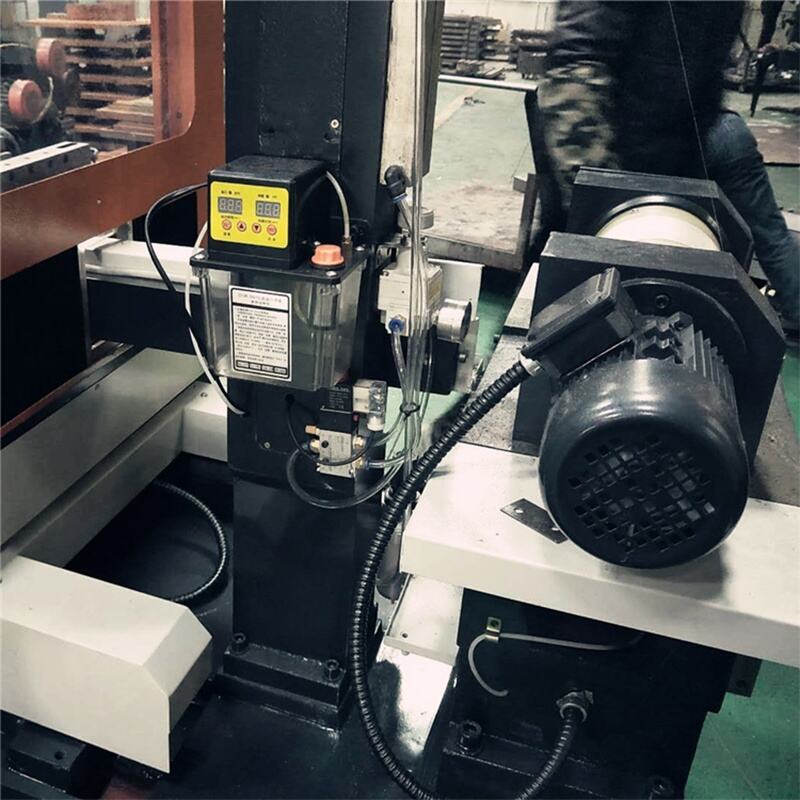
The relationship between wire feed speed, cutting speed, and discharge frequency determines the discharge pattern density on the workpiece surface. A wire cutting machine achieves smooth surface finishes when these parameters are balanced to produce sufficient discharge overlap without excessive energy concentration. Slower cutting speeds combined with higher discharge frequencies and moderate wire feed rates create dense discharge patterns with maximum crater overlap, resulting in the finest surface finishes. Control software in advanced wire cutting machine systems automatically calculates optimal parameter combinations based on material type, workpiece thickness, and desired surface finish specifications.
Dielectric Fluid Dynamics and Flushing Strategies
Dielectric Properties and Discharge Stability
The dielectric fluid serves multiple essential functions that directly influence how a wire cutting machine achieves smooth surface finishes. As an electrical insulator, the dielectric maintains gap isolation between the wire and workpiece until breakdown voltage is reached, ensuring controlled discharge initiation. As a coolant, it rapidly quenches the discharge zone to solidify molten material and prevent heat-affected zone expansion. As a flushing medium, it carries away eroded particles and prevents their redeposition onto freshly cut surfaces. The electrical resistivity, viscosity, cooling capacity, and contamination level of the dielectric fluid all significantly impact discharge stability and resulting surface quality.
Deionized water represents the most common dielectric fluid for wire electrical discharge machining due to its excellent cooling properties, low viscosity for effective flushing, and relatively low cost. The electrical resistivity of the dielectric must be carefully maintained within specified ranges, typically between one hundred thousand and five hundred thousand ohm-centimeters, through continuous filtration and deionization. A wire cutting machine achieves smooth surface finishes more reliably when its dielectric management system maintains consistent fluid properties through automatic monitoring of resistivity, temperature, and contamination levels with real-time adjustment of filtration and conditioning systems.
Flushing Pressure and Flow Direction Control
Effective flushing of the discharge gap removes eroded particles before they can cause secondary discharges or surface contamination. Flushing pressure significantly affects how completely debris is evacuated from the cutting zone, with higher pressures generally improving debris removal but potentially causing wire deflection if not properly controlled. A wire cutting machine achieves smooth surface finishes through optimized flushing strategies that balance debris removal effectiveness with discharge stability maintenance. Typical flushing pressures range from 0.5 to 2.0 megapascals, with finishing operations often employing lower pressures to minimize wire disturbance while rough cutting may utilize higher pressures for aggressive debris evacuation.
Flushing direction and nozzle positioning relative to the cutting zone further influence surface finish quality. Upper and lower flushing nozzles direct dielectric flow toward the cutting gap from both sides of the workpiece, creating turbulent flow conditions that enhance debris removal. Some wire cutting machine designs incorporate side flushing or multi-directional flushing systems that provide superior debris evacuation in thick workpieces or complex geometries where conventional vertical flushing may be inadequate. The flushing strategy must be adjusted based on workpiece thickness, cutting speed, and material type to ensure consistent surface quality throughout the entire cutting operation.
Dielectric Filtration and Contamination Management
Maintaining dielectric cleanliness through continuous filtration directly impacts the consistency with which a wire cutting machine achieves smooth surface finishes. Suspended particles in the dielectric fluid can trigger premature or uncontrolled discharges, creating surface defects and irregularities. Modern wire cutting machine installations typically incorporate multi-stage filtration systems with particle removal ratings of five micrometers or finer for finishing operations. Paper filters, cartridge filters, or magnetic separators remove metal particles eroded from the workpiece, while activated carbon or ion exchange resin beds maintain proper electrical resistivity.
The dielectric fluid circulation rate and tank capacity affect system stability and filtration effectiveness. Larger dielectric tanks provide greater thermal mass for temperature stabilization and more time for particle settlement before recirculation. A wire cutting machine achieves smooth surface finishes more consistently when its dielectric system maintains fluid temperature within narrow ranges, typically controlled to within plus or minus two degrees Celsius, preventing thermal expansion effects that would alter discharge gap dimensions and destabilize cutting conditions. Temperature control may be accomplished through heat exchangers, chillers, or thermostatically controlled heating elements depending on ambient conditions and operational requirements.
Motion Control Precision and Path Accuracy
Servo System Resolution and Positioning Accuracy
The mechanical positioning accuracy of the wire cutting machine directly determines geometric precision and indirectly influences surface finish quality through its effect on discharge gap consistency. High-resolution servo systems with encoder feedback enable positioning repeatability measured in micrometers or sub-micrometer ranges, ensuring that programmed cutting paths are executed with minimal deviation. A wire cutting machine achieves smooth surface finishes when its motion control system maintains constant discharge gap dimensions throughout complex cutting paths, preventing the gap variations that would cause discharge energy fluctuations and surface texture irregularities.
Modern computer numerical control systems in wire cutting machine applications utilize interpolation algorithms that calculate intermediate position points along curved paths with mathematical precision. Linear motor drives or precision ball screw systems convert these position commands into physical motion with minimal backlash or lost motion. The dynamic response characteristics of the servo system must be sufficient to maintain smooth motion during rapid direction changes and corner transitions without overshoot or oscillation that would create surface marks or texture variations. Acceleration and deceleration profiles are carefully programmed to ensure smooth velocity transitions that maintain consistent discharge conditions.
Adaptive Gap Control and Discharge Sensing
The gap control system represents perhaps the most critical element in how a wire cutting machine achieves smooth surface finishes. This system continuously monitors discharge conditions through voltage and current sensing, adjusting the servo feed rate to maintain optimal gap spacing for stable discharge generation. If the gap becomes too large, discharge frequency decreases and cutting efficiency drops. If the gap closes too much, short circuits or abnormal discharges occur, creating surface defects. Sophisticated adaptive control algorithms analyze discharge patterns in real-time, automatically adjusting feed rates, retract movements, and electrical parameters to maintain ideal discharge conditions despite variations in workpiece geometry, material properties, or cutting conditions.
Gap sensing technology has evolved from simple averaged voltage monitoring to advanced pattern recognition systems that can distinguish between normal discharges, open circuits, short circuits, and arc conditions. A wire cutting machine achieves smooth surface finishes through intelligent gap control that responds differently to various discharge conditions, retarding feed during unstable conditions and advancing more aggressively during periods of optimal discharge stability. Some advanced systems employ predictive algorithms that anticipate gap changes based on programmed geometry and adjust control parameters preemptively to maintain consistent conditions throughout complex cutting paths.
Corner Accuracy and Contour Following Precision
Geometric features such as sharp corners, small radii, and abrupt direction changes present particular challenges for maintaining consistent surface finish quality. During corner cutting, the effective discharge gap on the inside of the corner tends to decrease while the outside gap increases due to wire lag and electrode wear effects. A wire cutting machine achieves smooth surface finishes in corner regions through specialized control strategies that adjust cutting parameters during corner approach and exit. These strategies may include automatic feed rate reduction, discharge energy adjustment, or implementation of corner-specific flushing strategies that maintain consistent gap conditions throughout directional transitions.
Modern wire cutting machine systems incorporate look-ahead algorithms that analyze upcoming geometric features in the programmed path, automatically adjusting control parameters in anticipation of corners, radii, or other challenging features. This predictive control approach maintains more consistent discharge conditions than reactive systems that only respond after detecting gap changes. The result is more uniform surface texture across the entire cut surface, including corners and complex contour regions that would otherwise exhibit visible surface quality variations. Multiple finish passes with progressively refined parameters ensure that even the most challenging geometric features achieve specified surface finish requirements.
Advanced Technologies for Enhanced Surface Finish Capabilities
Automatic Parameter Optimization Systems
Contemporary wire cutting machine designs increasingly incorporate artificial intelligence and machine learning algorithms that automatically optimize cutting parameters for specific material and surface finish requirements. These systems analyze discharge patterns, cutting speeds, surface roughness measurements, and dimensional accuracy data to identify optimal parameter combinations without requiring extensive manual experimentation. A wire cutting machine achieves smooth surface finishes more efficiently when equipped with expert system databases that store proven parameter sets for various material types, thicknesses, and surface finish specifications, automatically selecting and implementing appropriate settings based on job requirements.
Adaptive learning systems observe actual cutting performance and automatically adjust parameters to compensate for variations in material properties, workpiece geometry, or environmental conditions. These intelligent control systems can detect subtle changes in discharge stability, wire condition, or dielectric contamination that human operators might not notice, implementing corrective adjustments before surface quality degrades. The cumulative knowledge gained through processing numerous workpieces enables continuous improvement in how effectively the wire cutting machine achieves smooth surface finishes across diverse applications and operating conditions.
Multi-Axis and Taper Cutting Capabilities
Advanced wire cutting machine configurations with four-axis or five-axis control enable independent positioning of upper and lower wire guides, allowing tapered cuts, complex three-dimensional contours, and variable-angle surfaces. These enhanced capabilities introduce additional complexity in maintaining consistent surface finishes across workpiece thickness and taper angles. A wire cutting machine achieves smooth surface finishes on tapered surfaces through sophisticated control algorithms that compensate for the varying discharge gap conditions that occur along the wire length when upper and lower guides follow different paths. Synchronized motion control ensures that discharge parameters remain optimal at all points along the wire despite the geometric complexity.
The ability to vary cutting angles throughout a program enables optimization of discharge conditions for different geometric features within a single workpiece. For example, vertical cuts may employ different parameters than angled surfaces to account for variations in effective discharge gap and flushing efficiency. Modern wire cutting machine systems with multi-axis capability incorporate geometry-aware control strategies that automatically adjust parameters based on local cutting conditions throughout complex three-dimensional cutting paths, maintaining consistent surface quality across all surfaces regardless of orientation or angle.
Surface Finish Measurement and Closed-Loop Control
Emerging wire cutting machine technologies incorporate in-process surface finish monitoring systems that measure actual surface roughness during or immediately after cutting operations. These measurement systems may utilize optical profilometry, laser scanning, or contact stylus methods to quantify surface texture parameters such as average roughness, peak-to-valley height, and bearing ratio. A wire cutting machine achieves smooth surface finishes with greater consistency when equipped with closed-loop surface finish control that compares measured results against target specifications and automatically implements corrective parameter adjustments for subsequent workpieces or cutting passes.
Quality control integration enables statistical process monitoring that tracks surface finish trends over time, identifying gradual degradation in performance due to wire guide wear, dielectric contamination buildup, or other factors requiring maintenance attention. Predictive maintenance algorithms analyze performance data to schedule preventive maintenance activities before surface finish quality deteriorates beyond acceptable limits. This proactive approach to quality management ensures that the wire cutting machine consistently achieves smooth surface finishes that meet or exceed specifications throughout extended production runs without unexpected quality variations or rejected parts.
FAQ
What surface roughness values can typically be achieved by a wire cutting machine?
A wire cutting machine achieves smooth surface finishes with roughness values typically ranging from 0.8 to 3.2 micrometers Ra for standard finishing operations using optimized parameters and multiple finish passes. With specialized finishing techniques, advanced control systems, and fine wire electrodes, surface roughness values as low as 0.2 to 0.4 micrometers Ra can be achieved, approaching the quality of ground surfaces. The actual achievable finish depends on material properties, workpiece thickness, discharge energy settings, wire diameter, dielectric condition, and the number of finish passes programmed. Harder materials generally permit finer finishes than softer materials due to reduced crater deformation and more controlled material removal characteristics.
How many finishing passes are typically required to achieve the smoothest possible surface finish?
Most wire cutting machine applications employ two to four finishing passes after the initial rough cutting operation to achieve optimal surface finish quality. The first finish pass removes the majority of the rough cutting texture using moderately reduced discharge energy. Subsequent passes progressively refine the surface with increasingly lower energy settings, each pass removing smaller amounts of material while smoothing the texture left by the previous operation. Applications requiring the finest possible finishes may utilize five or more passes with carefully optimized parameter progressions. The diminishing returns from additional passes must be balanced against increased cycle time, as each additional pass provides progressively smaller improvements in surface roughness while proportionally extending total cutting time.
Does cutting speed affect the surface finish quality produced by a wire cutting machine?
Cutting speed and surface finish quality maintain an inverse relationship in wire electrical discharge machining operations. A wire cutting machine achieves smooth surface finishes through slower cutting speeds during finishing passes because reduced feed rates allow higher discharge frequencies per unit of cutting path length, creating more overlapping craters and finer surface textures. Faster cutting speeds during rough cutting operations produce coarser finishes due to fewer discharges per path length and higher energy settings required for efficient material removal. The optimal finishing speed depends on material type, workpiece thickness, desired surface roughness, and economic considerations balancing quality requirements against production throughput. Modern control systems automatically adjust cutting speed throughout the program based on geometric complexity and specified finish requirements.
Can a wire cutting machine produce different surface finishes on opposite sides of the same cut?
The electrical discharge erosion process in wire electrical discharge machining produces inherently asymmetric material removal patterns, with slightly different surface characteristics on the wire approach side versus the exit side of the cut. However, a well-maintained wire cutting machine achieves smooth surface finishes that are functionally identical on both cut surfaces when proper flushing, wire tension, and discharge parameter control are maintained. Significant finish differences between sides typically indicate problems such as inadequate flushing, contaminated dielectric, worn wire guides, or improper discharge parameter settings. Advanced finishing strategies and optimized control parameters minimize any inherent asymmetry, producing consistent surface quality on all cut surfaces regardless of cutting direction or wire position relative to the workpiece.
Table of Contents
- The Electrical Discharge Erosion Mechanism Behind Surface Quality
- Wire Electrode Properties and Their Impact on Surface Quality
- Dielectric Fluid Dynamics and Flushing Strategies
- Motion Control Precision and Path Accuracy
- Advanced Technologies for Enhanced Surface Finish Capabilities
-
FAQ
- What surface roughness values can typically be achieved by a wire cutting machine?
- How many finishing passes are typically required to achieve the smoothest possible surface finish?
- Does cutting speed affect the surface finish quality produced by a wire cutting machine?
- Can a wire cutting machine produce different surface finishes on opposite sides of the same cut?