EN
EN



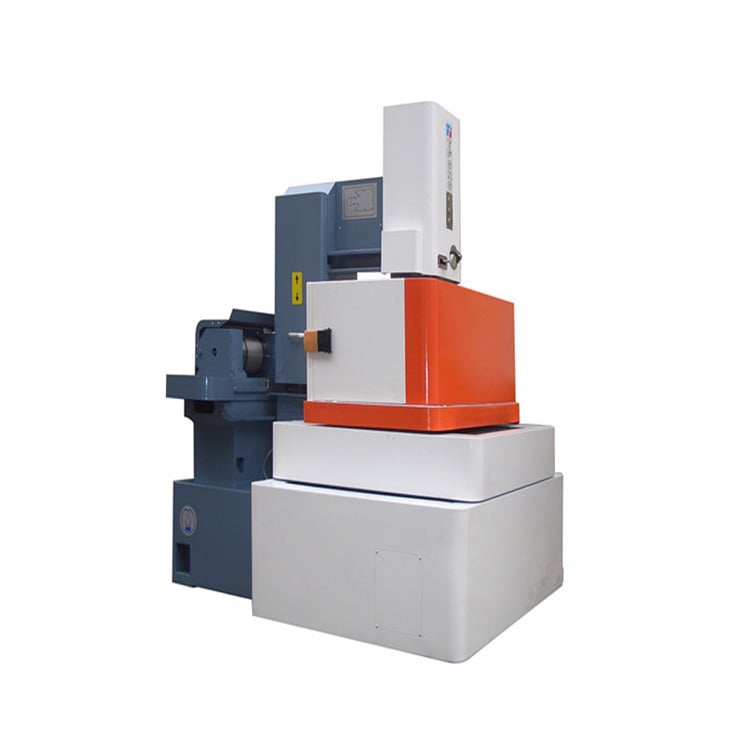
When manufacturers face the challenge of producing intricate geometries, tight tolerances, or hardened materials that resist conventional cutting tools, EDM machining consistently emerges as the preferred solution. Electrical Discharge Machining is a non-contact thermal erosion process that removes material through precisely controlled electrical sparks, making it uniquely suited for complex parts that would otherwise be impossible or impractical to machine by traditional methods. Understanding its specific advantages helps engineers, procurement managers, and production planners make well-informed decisions about when and why to deploy this technology.
The growing demand for high-precision components in industries such as aerospace, medical devices, automotive tooling, and mold manufacturing has positioned EDM machining as a critical capability rather than a niche process. Its ability to work with virtually any electrically conductive material, regardless of hardness, while maintaining exceptional dimensional accuracy gives it a distinct edge over many alternative manufacturing technologies. This article explores the core advantages of EDM machining for complex parts, breaking down the technical, economic, and operational factors that make it a cornerstone of modern precision manufacturing.
How EDM Machining Handles Material Hardness Without Compromise
Machining Hardened Steels and Exotic Alloys
One of the most significant advantages of EDM machining is its complete independence from the mechanical hardness of the workpiece material. Traditional milling and turning rely on cutting tools that must be harder than the material being machined, which creates practical limits when working with hardened tool steels, carbide, Inconel, titanium, and other high-performance alloys. EDM machining removes material through electrical discharge rather than physical force, so hardness is simply irrelevant to the process.
This means manufacturers can machine a component after it has already been heat-treated and hardened to its final specification. Eliminating the need to machine before heat treatment removes a major source of dimensional distortion, since hardening processes inevitably introduce some degree of warping. The finished part retains both its intended geometry and its required material properties simultaneously, which is a capability that very few other processes can offer at comparable precision levels.
For industries where material performance is non-negotiable, such as die and mold making or aerospace structural components, this characteristic of EDM machining translates directly into higher component reliability and reduced post-processing rework. It allows design engineers to specify materials based purely on performance requirements rather than machinability constraints.
No Mechanical Stress or Tool Pressure on the Workpiece
Because EDM machining is a non-contact process, it applies zero mechanical cutting force to the workpiece. In conventional machining, tool pressure can cause deflection, micro-cracking, residual stress buildup, and surface deformation, especially in thin-walled sections or delicate features. These effects are eliminated entirely with EDM machining, making it ideal for fragile geometries that would distort or fracture under normal cutting conditions.
Thin ribs, deep cavities, intricate internal features, and miniature components all benefit from this absence of mechanical force. The workpiece remains dimensionally stable throughout the machining process, and the risk of part damage due to tool vibration or chatter is nonexistent. This non-contact characteristic is a fundamental reason why EDM machining is trusted for high-value, low-tolerance components where scrapping even a single part carries significant cost.
Geometric Complexity That Other Processes Cannot Achieve
Deep Cavities, Sharp Internal Corners, and Fine Details
EDM machining excels at producing geometric features that are physically inaccessible or technically unachievable with rotary cutting tools. Deep narrow cavities, undercuts, sharp internal corners with very small radii, and complex three-dimensional contours are all within the natural capability of EDM machining. Die-sinking EDM, in particular, allows manufacturers to replicate an electrode shape directly into a workpiece with remarkable fidelity, enabling cavity profiles that no milling cutter could follow.
Sharp internal corners deserve special mention because they represent one of the most persistent challenges in conventional machining. A rotating end mill always leaves a radius at internal corners determined by the tool diameter. EDM machining can produce internal corner radii approaching zero, which is critical for die and punch tooling where part fit and material flow depend on precise corner geometry. This capability alone justifies the use of EDM machining in many toolmaking applications.
Fine surface textures and detailed surface patterns can also be achieved through EDM machining by controlling the discharge energy parameters. Mold cavities for consumer products, decorative components, and textured surfaces for functional purposes all benefit from this level of surface control, which is difficult to replicate consistently through grinding or polishing.
Complex Through-Holes and Intricate Profiles with Wire EDM
Wire EDM machining extends geometric capability further by using a continuously moving wire electrode to cut complex two-dimensional profiles through a workpiece with extreme precision. This allows production of intricate punch and die profiles, turbine blade slots, gear forms, and custom aperture shapes that require tight tolerances on both size and position. The wire follows a programmed CNC path, enabling virtually any contour shape without the need for custom tooling.
Wire EDM machining is particularly valuable for cutting hardened materials to final shape, since the part can be fully hardened before the wire cutting operation begins. Tolerances in the range of a few micrometers are routinely achievable, and the process maintains consistent accuracy throughout long production runs. For parts where profile accuracy is the defining quality criterion, wire EDM machining provides a level of control that is difficult to match.
Dimensional Accuracy and Surface Quality in EDM Machining
Tight Tolerances Across All Feature Types
EDM machining is capable of holding dimensional tolerances that rival or exceed those achievable through grinding. Tolerances of plus or minus 0.005 millimeters or tighter are standard in well-controlled EDM machining operations, and specialized applications can push accuracy even further. This level of precision is consistent across complex three-dimensional surfaces, not just simple flat or cylindrical features, which is a key distinction from many other high-precision processes.
The process is inherently repeatable because it is driven by programmed discharge parameters and CNC path control rather than operator skill or tool wear patterns. Once a stable EDM machining process is established, it can produce identical parts with very low variation, which is essential for interchangeable components in high-precision assemblies. Batch-to-batch consistency is a critical requirement in industries like medical device manufacturing and precision instrument production.
Additionally, EDM machining does not require the same level of fixturing complexity as some grinding operations for complex shapes. The workpiece can often be set up in a straightforward orientation, with the machine's CNC capability handling the geometric complexity of the machined feature. This simplifies process planning and reduces setup time for intricate parts.
Controlled Surface Finish from Rough to Mirror Quality
EDM machining offers a wide range of achievable surface finishes by adjusting the discharge energy settings. Rough EDM machining with high energy removes material quickly but leaves a relatively coarse surface texture. As discharge energy is progressively reduced through finishing passes, the surface becomes smoother, eventually reaching mirror-like quality suitable for optical surfaces, precision sealing faces, and high-gloss mold cavities.
This programmable control over surface finish means that a single EDM machining operation can transition from bulk material removal to final surface finishing without changing the workpiece setup. The time and positioning accuracy that would otherwise be lost in transferring the part between machines is preserved, contributing both to precision and to overall process efficiency. For mold and die applications, achieving the required surface finish directly through EDM machining eliminates extensive manual polishing, reducing labor cost and human-introduced variability.
Process Efficiency and Economic Advantages for Complex Parts
Unattended Operation and Lights-Out Manufacturing
Modern CNC-controlled EDM machining systems are designed for extended unattended operation. Once a setup is established and the program is verified, the machine can run overnight or through weekends without operator supervision. Automatic electrode changers, workpiece changers, and adaptive process controls allow EDM machining to execute complex multi-cavity or multi-part jobs autonomously, maximizing spindle utilization and reducing labor cost per part.
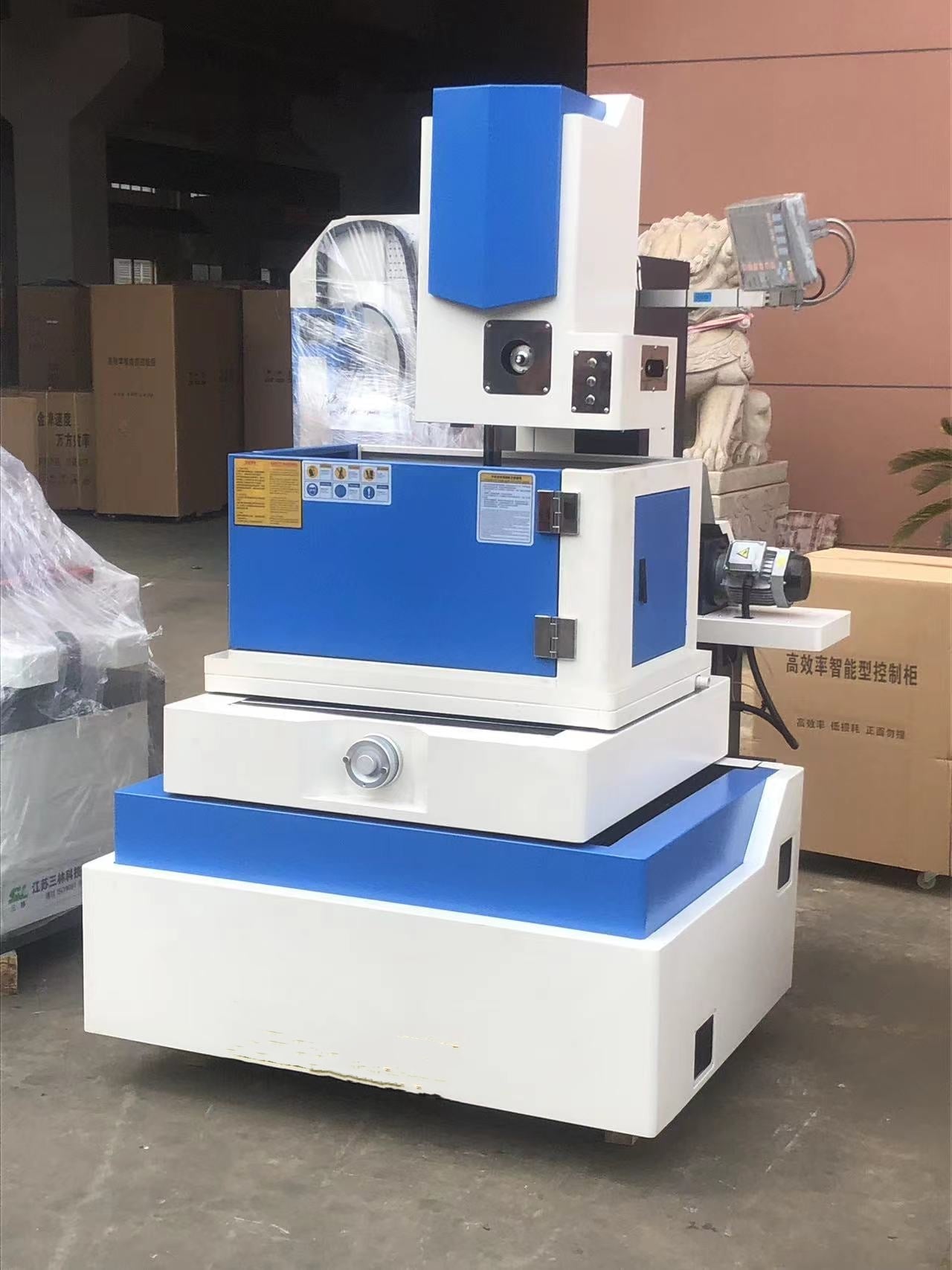
This capability is particularly valuable for small-to-medium batch production of complex components where setup time is a significant portion of total job time. By running unattended during off-hours, manufacturers effectively convert fixed machine capacity into productive output without proportional increases in labor cost. For job shops and toolmakers working against tight delivery deadlines, this autonomous characteristic of EDM machining provides a meaningful competitive advantage.
Adaptive spark control systems in advanced EDM machining equipment continuously monitor the discharge process and adjust parameters in real time to maintain stable cutting conditions. This prevents arcing, reduces electrode wear, and optimizes material removal rate automatically, which further reduces the need for active operator intervention during long machining cycles.
Reducing Secondary Operations and Assembly Complexity
Because EDM machining can produce features to final dimension and surface quality in a single setup, it frequently eliminates the need for downstream finishing operations such as grinding, lapping, or hand polishing. This reduction in secondary operations shortens total lead time, reduces the number of setups the part must pass through, and lowers the cumulative risk of dimensional drift introduced by multiple handling and setup cycles.
In tooling applications specifically, the ability of EDM machining to produce complete cavity details, including textures, radii, and surface finish, in one operation replaces what would otherwise require a sequence of grinding, EDG, and manual finishing steps. The economic and scheduling benefits compound when production volumes increase, since every eliminated operation multiplies its savings across the entire production run.
Complex assemblies that previously required multiple separately machined components can sometimes be simplified into fewer parts when EDM machining makes intricate single-piece designs manufacturable. Reducing part count in an assembly improves reliability, simplifies inventory management, and can reduce overall assembly labor, advantages that extend well beyond the machining operation itself.
Application Suitability Across Key Industries
Mold, Die, and Tooling Manufacturing
The mold and die industry represents one of the most established and extensive applications for EDM machining. Injection mold cavities, compression mold inserts, stamping dies, forging dies, and extrusion tooling all depend heavily on EDM machining to produce their defining geometric features. The combination of hardened material compatibility, sharp corner capability, deep cavity access, and fine surface finish makes EDM machining nearly indispensable in toolroom operations worldwide.
Electrode design and fabrication have also become more efficient with advances in high-speed graphite milling, allowing EDM machining electrodes to be produced quickly and accurately. The overall toolmaking workflow has become faster and more predictable as a result, with EDM machining serving as the final precision step that translates electrode geometry into finished cavity detail.
Aerospace, Medical, and High-Precision Engineering
Aerospace components such as turbine blade cooling holes, fuel system components, and structural brackets in exotic alloys routinely rely on EDM machining for their most demanding features. The process handles nickel superalloys, titanium, and hardened stainless steel with equal precision, without inducing the heat-affected zone depth or mechanical damage that can compromise fatigue life in safety-critical parts.
Medical device manufacturing uses EDM machining for surgical instruments, implant components, and diagnostic equipment parts where biocompatible materials and micro-scale precision are required. The non-contact nature of EDM machining protects delicate features, and the process is compatible with the stainless steels, cobalt-chrome alloys, and titanium grades commonly specified in medical applications. Tight dimensional control ensures device functionality and patient safety.
High-precision engineering in general — covering scientific instruments, semiconductor equipment, optical mounts, and precision mechanisms — benefits from EDM machining whenever component geometry or material hardness exceeds the practical reach of conventional machining. The process bridges the gap between design intent and manufacturing reality for parts that push the boundaries of what is otherwise achievable.
FAQ
What types of materials can be processed using EDM machining?
EDM machining can process any material that is electrically conductive. This includes hardened tool steels, stainless steels, titanium alloys, nickel superalloys, tungsten carbide, copper alloys, and aluminum. The process is not affected by material hardness, which is one of its defining advantages over conventional cutting methods.
How does EDM machining compare to conventional milling for complex parts?
Conventional milling is faster and more cost-effective for simple geometries and soft materials. EDM machining becomes the superior choice when the part requires features that milling cannot produce, such as sharp internal corners, deep narrow cavities, hardened material machining after heat treatment, or extremely tight tolerances on complex surfaces. The two processes are often used together, with milling handling bulk material removal and EDM machining completing precision details.
Does EDM machining affect the surface integrity of the finished part?
EDM machining does create a thin recast layer and a small heat-affected zone at the machined surface due to the thermal nature of the process. In most applications, this layer is removed during finishing passes with low discharge energy. For safety-critical applications such as aerospace fatigue-sensitive components, the recast layer can be removed through additional processes such as abrasive flow machining or controlled acid etching if required by the design specification.
Is EDM machining suitable for high-volume production?
EDM machining is most economical for low-to-medium volume production, prototype work, and toolmaking where geometric complexity or material hardness justifies the process. For high-volume production of simple parts, faster cutting processes are generally more cost-effective. However, EDM machining remains the appropriate choice in high-volume tooling contexts, where the tool itself is produced in small quantities but then used to manufacture large volumes of molded or stamped components.