EN
EN



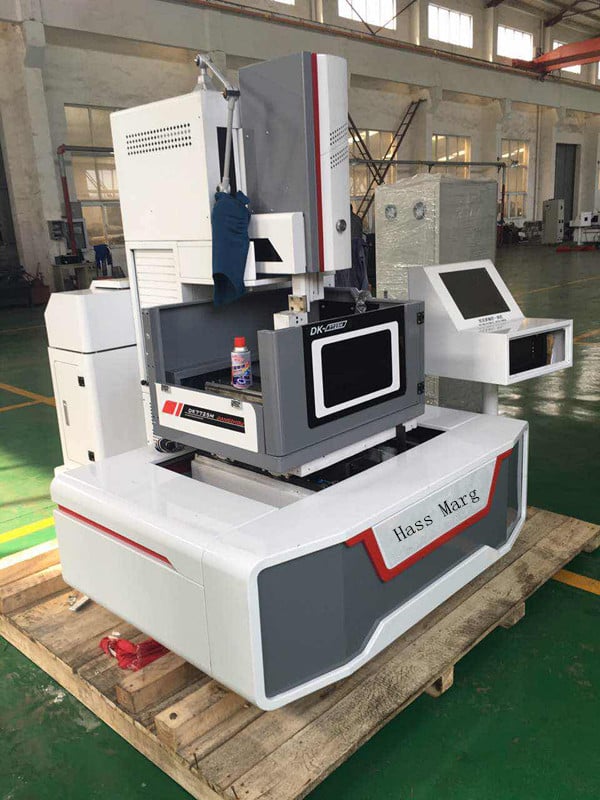
Wire EDM is most useful when a buyer needs a precise through-profile in an electrically conductive material, especially after the workpiece has been hardened or when conventional cutting force could distort a delicate feature. It can produce complex contours, narrow slots and small internal radii without a rotating cutting tool. These advantages are conditional: the workpiece must conduct electricity, the wire needs a path through the part, and the final result depends on material, thickness, wire condition, working fluid, flushing, electrical parameters, cut strategy and inspection.
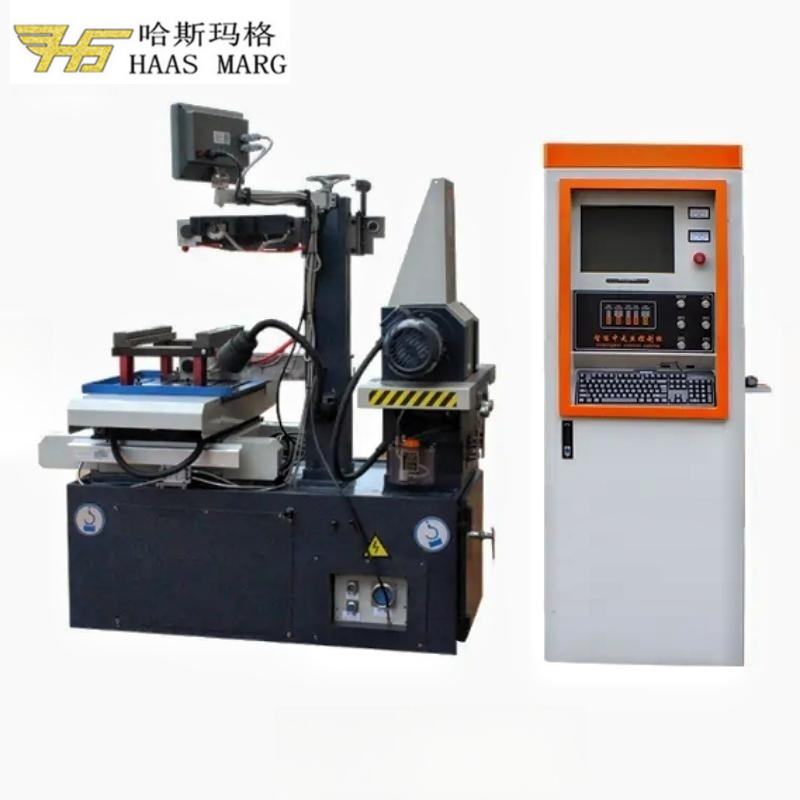
HarsMarg's current single-cut and multi-cut Wire EDM machines use reusable molybdenum wire stored on a wire drum and moving back and forth through the cutting zone. The main selection difference is the process plan: single-cut machines use one planned production cut, while multi-cut machines can add trimming cuts after the first cut when the drawing requires improved dimensional or surface results.
What Are the Practical Advantages of Wire EDM?
Low Conventional Cutting Force
Material is removed by controlled electrical discharges rather than by a cutting edge pressing into the workpiece. Mechanical cutting load is therefore much lower than in milling or sawing. This can help when machining thin sections, slender details, small punches or parts that are difficult to hold against conventional cutting forces.
Low cutting load does not mean that the process is force-free. The flexible wire can bow under discharge and flushing forces, residual stress can move a released section, and a falling slug can disturb the cut. Stable support, an appropriate cut sequence and controlled flushing remain necessary.
Machining Hardened Conductive Materials
Wire EDM can machine electrically conductive material after heat treatment because it does not depend on a conventional tool edge cutting through the material. Hardened tool steels, conductive carbides and suitable conductive alloys can therefore be considered without first returning the part to a soft condition.
This can reduce the need to leave every critical profile for soft-state machining before heat treatment. It does not mean that every conductive material cuts at the same speed or reaches the same result. Electrical and thermal properties, material grade, thickness, heat-treatment condition and process settings still affect stability, cutting time and surface integrity.
Complex Through-Contours and Internal Profiles
A programmed wire path can produce complex through-contours, narrow slots, die and punch profiles, and repeated two-dimensional features. Where the selected machine and configuration provide the required upper/lower guide motion, a controlled taper or different upper and lower profiles may also be possible within the machine's stated range.
The wire must be able to enter and pass through the workpiece. An external profile can begin from an edge; a closed internal profile normally requires a prepared start hole. Wire EDM should not be described as a general method for blind cavities, sealed cooling channels or arbitrary three-dimensional internal passages. Compare EDM drilling for start holes and die-sinking EDM for suitable blind-cavity work.
Small Internal Radii and Controlled Kerf
A fine wire can produce a narrower cut and a smaller internal radius than many rotating tools. This is useful for detailed profiles, closely spaced features and work where material conservation matters. Wire EDM typically does not form the same mechanical cutting burr as a conventional tool edge, although entry, exit, slug separation, adhered debris and the thermal surface condition still require inspection.
Wire EDM cannot create a mathematically sharp internal corner. The minimum practical radius and final profile depend on wire diameter, discharge gap, offset, corner-control strategy, workpiece thickness, wire tension, flushing and machine condition.
Repeatable CNC Path and Conditional Finish Improvement
Once a drawing, datum, fixture, wire route, working-fluid condition, electrical program and inspection method have been qualified, CNC path control can support repeatable production. For multi-cut work, trimming passes can remove a controlled allowance after the first cut and improve dimensional and surface results under suitable conditions.
Repeatability is not an automatic guarantee. Program revision, offset, wire condition, guide condition, temperature, flushing, workholding and measurement must remain controlled. See the Wire EDM accuracy and inspection checklist for a more detailed verification workflow.
Wire EDM Advantages and Their Conditions
| Potential Advantage | Why It Can Help | Condition or Limitation |
|---|---|---|
| Low mechanical cutting load | Can reduce distortion caused by conventional tool pressure | Fixture stability, residual stress, flushing and slug control still matter |
| Hardened-material capability | Allows suitable conductive parts to be profiled after heat treatment | Conductivity and material/process compatibility must be confirmed |
| Complex through-profile | CNC path can follow detailed external and internal contours | Closed internal profiles normally need a start hole; blind cavities need another process |
| Small radius and narrow kerf | Useful for fine details and closely spaced features | Limited by wire radius, spark gap, offset, thickness and corner control |
| Trimming-cut improvement | Can improve surface and dimensional results after the first cut | Requires the correct allowance, offset, settings and inspection for every pass |
| Repeatable programmed path | A qualified setup can be reused for recurring production | Machine condition, wire, fluid, fixture and environment must remain controlled |
Where Does Wire EDM Have Limits?
The Workpiece Must Be Electrically Conductive
Ordinary insulating plastics, glass and non-conductive ceramics cannot be cut by conventional Wire EDM. A material name alone is not enough: confirm the grade, conductivity, heat treatment and any coating or composite structure before selecting the process.
The Wire Needs Access Through the Cut
A through-profile must be reachable from a workpiece edge or a prepared start hole. The part and fixture must also allow upper and lower wire-guide access, flushing and safe slug management. These constraints should be checked from the actual drawing, not inferred from overall part dimensions.
Wire EDM Is a Thermal Process
Electrical discharges melt and remove small volumes of material. The machined surface can therefore include a recast layer, heat-affected zone, residual stress or microcracking. Lower-energy trimming cuts may reduce these effects, but critical surface-integrity requirements need an acceptance rule and an inspection method.
Simple Cuts May Be Faster by Another Process
Wire EDM is not automatically the fastest or lowest-cost method. Sawing, milling, laser cutting or another process may be more economical for a simple open shape, rapid bulk removal or a non-conductive material. Total Wire EDM time includes setup, start-hole preparation when required, the first cut, every trimming cut, inspection and any secondary work. Review the Wire EDM cutting-speed guide before comparing unrelated catalogue rates.
Wire, Fluid and Machine Condition Still Require Control
Reciprocating molybdenum wire is reusable, but it does not remain unchanged indefinitely. Wire wear, guide and conductive-contact condition, working-fluid quality, filtration, flushing, insulation, lubrication and electrical maintenance affect process stability and operating cost. Wire EDM has different consumables from milling; it does not eliminate consumables or maintenance.
Single-Cut vs Multi-Cut HarsMarg Wire EDM
| Selection Point | Single-Cut / Fast-Wire | Multi-Cut / Medium-Speed |
|---|---|---|
| Wire system | Drum-stored, reciprocating reusable molybdenum wire | Drum-stored, reciprocating reusable molybdenum wire |
| Cut sequence | One planned production cut | First cut followed by trimming cuts when required |
| Published finish reference | Published reference: optimal Ra ≤ 2.0 µm under the model's stated process conditions; verify the result for the selected material and geometry | Published multi-cut reference: first cut Ra ≤ 2.0 µm and after trimming Ra ≤ 0.8 µm under the stated process conditions; verify the result for the selected part |
| Accuracy evidence | Model- and specimen-specific; the DK7725 reference is not a series guarantee | For the specified 40 mm-high, 28 mm regular octagonal specimen, dimensional deviation after trimming was 0.009 mm across the vertical section and 0.010 mm across the horizontal section |
| When to evaluate | When one qualified cut can meet the drawing and finish requirement | When the quality target justifies a controlled trimming process |
| Cycle-time calculation | Include setup, the complete production cut and inspection | Include setup, first cut, every trimming cut and inspection |
The published single-cut and multi-cut examples use different specimens and conditions, so they are not a controlled head-to-head test. They show how capability should be stated: with the model, material, specimen, cut stage and inspection context visible. For a fuller comparison, read single-cut vs multi-cut Wire EDM.
When Should You Choose Wire EDM Instead of Another Process?
| Requirement | Useful Starting Process | Reason to Verify |
|---|---|---|
| Complex through-profile in a hardened conductive part | Wire EDM | Confirm start access, corner radius, thickness, taper, tolerance and surface-integrity requirement |
| Simple open cut or rapid bulk removal | Sawing, milling or another conventional process may be more economical | Compare complete cycle, tolerance, burr control, workholding and later finishing |
| Small deep start hole | EDM drilling | Confirm electrode range, material, depth, hole requirement and flushing |
| Blind cavity or shaped recess | Die-sinking EDM or milling, depending on the part | Wire EDM cannot directly follow an enclosed blind-cavity surface |
| Fast sheet profile | Laser, stamping or another process may be a better first comparison | Compare material, thickness, heat input, edge quality, quantity and tooling cost |
This table is a process-screening guide, not a substitute for reviewing the drawing. The most economical method is the one that meets the complete requirement with an acceptable setup, cycle, inspection and rework risk.
What Determines the Actual Wire EDM Result?
- Workpiece: material grade, conductivity, hardness, heat treatment, dimensions, thickness, weight and residual stress.
- Geometry: contour length, minimum internal radius, narrow slots, taper, thickness changes, lead-in/out, start hole and slug behavior.
- Wire system: molybdenum-wire diameter and condition, wire path, guide condition, tension, wire speed and stable reversal.
- Process condition: working-fluid quality, filtration, flushing, electrical parameters, offset, first-cut allowance and every trimming condition.
- Setup: fixture rigidity, datum, machine leveling, ambient temperature, program revision and operator checks.
- Inspection: what is measured, where it is measured, instrument, temperature, sampling plan and acceptance rule.
A catalogue value without these conditions is not a reliable prediction for a customer's part. Use a controlled trial or sample-cut plan when the tolerance, surface roughness, straightness, taper or metallurgical condition is critical. The Wire EDM setup checklist explains how to document the starting condition.
Information to Send for Machine Selection
For a useful technical review, send:
- Part drawing and workpiece material grade, hardness and heat-treatment condition
- Overall X/Y dimensions, maximum cutting thickness, workpiece weight and fixture allowance
- Required contour, minimum internal radius, slot, taper and start-hole information
- Dimensional tolerance, straightness and surface-roughness requirements
- Surface-integrity or recast-layer acceptance requirement, when relevant
- Expected quantity, batch size, target cycle and inspection method
- Destination country, local voltage/frequency and required controller or automation functions
- Whether a sample cut and inspection record are required before ordering
HarsMarg can use this information to compare the complete Wire EDM machine range and identify whether a single-cut or multi-cut process is the better starting point. Final capacity, controller, electrical configuration and expected result should be confirmed in the technical quotation.
Frequently Asked Questions
What are the main advantages of Wire EDM?
The main advantages are low conventional cutting force, the ability to machine hardened conductive materials, detailed through-contours, small internal radii and a controllable CNC path. Multi-cut processing can also improve dimensional and surface results. Every advantage depends on the material, geometry, machine, wire, fluid, setup and required quality.
Can Wire EDM cut hardened steel and carbide?
It can cut suitable electrically conductive hardened steels and conductive carbide materials. Confirm the exact grade, conductivity, binder, heat treatment, thickness and surface-integrity requirement because cut stability, rate and result are not identical for every material.
Does Wire EDM produce burr-free parts?
Wire EDM does not form the same mechanical cutting burr as a conventional tool edge, but “burr-free” should not be used as an unconditional acceptance claim. Entry/exit condition, slug separation, recast layer, adhered debris and handling damage still need inspection.
Does multi-cut always provide better accuracy?
No. Trimming provides a process route for improving the result, but it does not guarantee one accuracy value for every part. The first-cut allowance, offsets, electrical conditions, wire, fluid, fixture, material, thickness and measurement method must be matched to the job.
When should I choose single-cut instead of multi-cut?
Choose single-cut as the more direct option when one qualified production cut can meet the drawing and finish requirement. Evaluate multi-cut when the required dimensional or surface result justifies a first cut followed by controlled trimming cuts. Do not choose from the words “fast” or “medium” alone.
Request a Technical Review
Send the drawing, material, workpiece size and weight, maximum cutting thickness, tolerance, surface requirement, quantity, inspection method, destination and power supply. HarsMarg can review the appropriate work envelope and cutting strategy and, when needed, discuss a sample-cut plan. Send your application details for a technical review.
Table of Contents
- What Are the Practical Advantages of Wire EDM?
- Wire EDM Advantages and Their Conditions
- Where Does Wire EDM Have Limits?
- Single-Cut vs Multi-Cut HarsMarg Wire EDM
- When Should You Choose Wire EDM Instead of Another Process?
- What Determines the Actual Wire EDM Result?
- Information to Send for Machine Selection
- Frequently Asked Questions
- Request a Technical Review