EN
EN



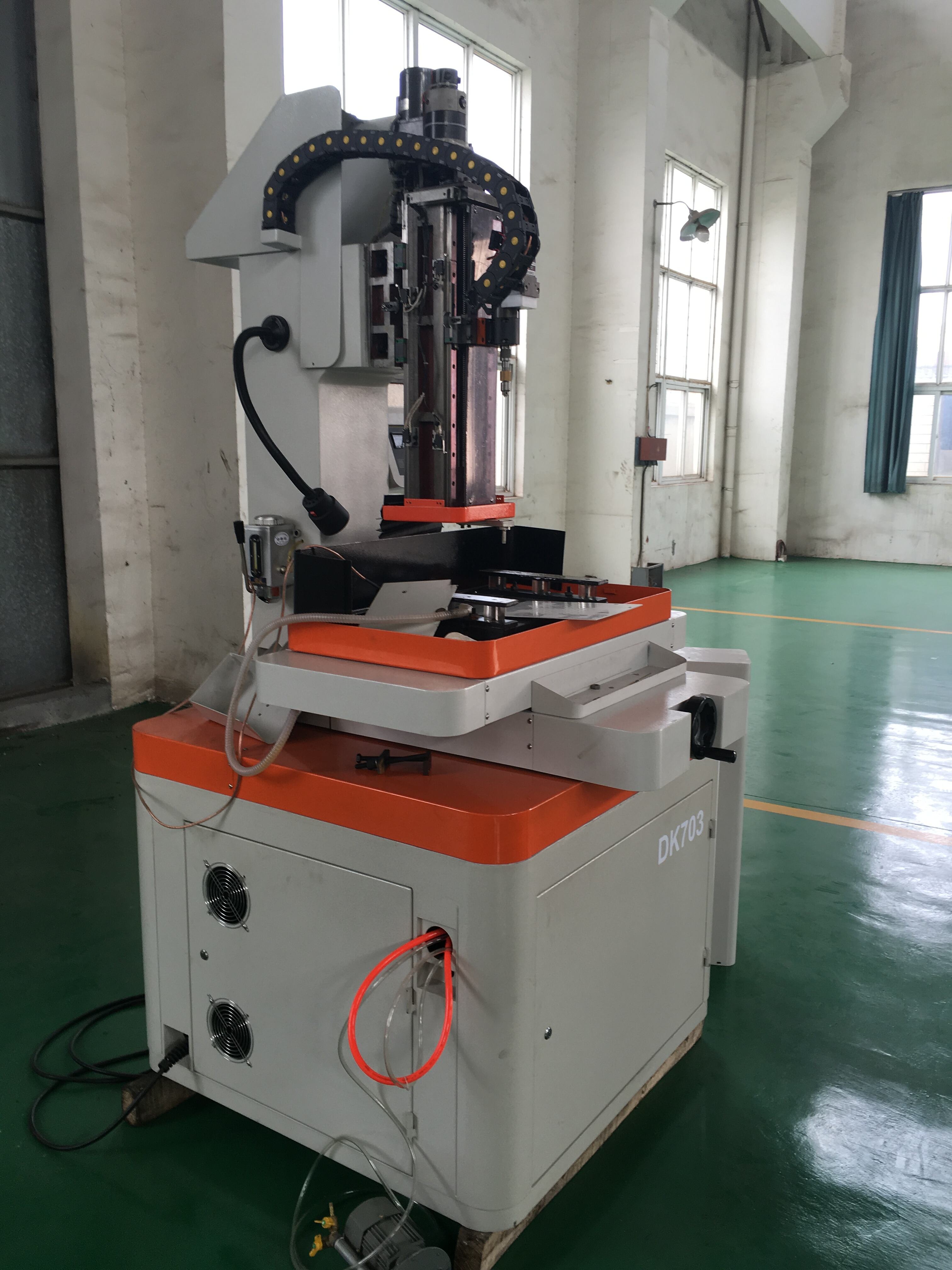
EDM drilling has revolutionized precision manufacturing by offering unparalleled accuracy and versatility in creating micro-holes and complex geometries. This advanced machining technique utilizes electrical discharge to remove material, enabling manufacturers to achieve tolerances that traditional drilling methods simply cannot match. As industries demand increasingly sophisticated components, EDM drilling continues to prove its value across aerospace, medical device manufacturing, automotive, and electronics sectors.
Precision and Accuracy Capabilities
Microscopic Hole Creation
The precision capabilities of EDM drilling extend far beyond conventional drilling methods, particularly when creating microscopic holes with diameters as small as 0.025mm. This extraordinary precision stems from the non-contact nature of the electrical discharge process, which eliminates mechanical stress and tool wear that typically compromise accuracy in traditional drilling. Manufacturing sectors requiring fuel injection nozzles, cooling holes in turbine blades, and micro-vents in electronic components rely heavily on this capability.
Modern EDM drilling systems incorporate advanced servo control mechanisms that maintain consistent electrode positioning throughout the drilling process. The electrical discharge creates a controlled erosion pattern that ensures uniform hole geometry from entry to exit point. This consistency proves particularly valuable when drilling deep holes with high aspect ratios, where traditional drilling would result in significant dimensional variations.
Tolerance Achievement Standards
Achieving tolerances within ±0.001mm represents a standard expectation for quality EDM drilling operations. The process achieves these tight tolerances through precise control of electrical parameters including current, voltage, and pulse duration. Each discharge event removes material in predictable quantities, allowing operators to fine-tune the process for specific dimensional requirements.
Temperature control during the drilling process plays a crucial role in maintaining dimensional accuracy. The dielectric fluid not only facilitates the electrical discharge but also provides cooling and debris removal, preventing thermal distortion that could compromise final dimensions. This comprehensive process control enables manufacturers to consistently meet the stringent requirements of aerospace and medical applications.
Material Versatility and Hardness Independence
Hardened Steel Processing
One of the most significant advantages of EDM drilling lies in its ability to process materials regardless of their hardness level. Hardened tool steels, which pose significant challenges for conventional drilling methods, can be processed with the same ease as softer materials. This capability eliminates the need for pre-hardening machining or post-hardening thermal treatment adjustments that complicate traditional manufacturing workflows.
The electrical discharge mechanism operates independently of material mechanical properties, relying instead on electrical conductivity. This characteristic enables EDM drilling to create precise holes in materials with hardness ratings exceeding 60 HRC without tool wear or dimensional drift. Manufacturers can therefore complete entire machining operations on finished components without compromising surface integrity or dimensional accuracy.
Exotic Alloy Compatibility
Advanced manufacturing applications increasingly require processing of exotic alloys such as Inconel, Hastelloy, and titanium-based composites. These materials present significant challenges for conventional drilling due to their work-hardening characteristics and poor thermal conductivity. EDM drilling overcomes these obstacles by utilizing electrical energy rather than mechanical force to remove material.
The non-contact nature of EDM drilling prevents work-hardening of the surrounding material, maintaining the original metallurgical properties of exotic alloys. This preservation of material characteristics proves essential in aerospace applications where component performance depends on maintaining specific material properties throughout the manufacturing process. Additionally, the controlled thermal input minimizes heat-affected zones that could compromise material integrity.
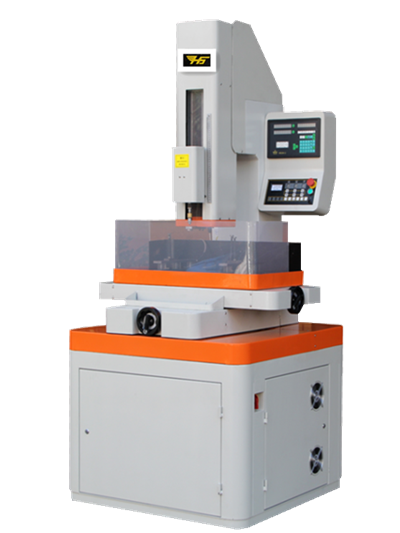
Complex Geometry Capabilities
Angular and Curved Hole Creation
Modern EDM drilling systems excel at creating complex hole geometries that would be impossible with conventional drilling methods. Angular holes, curved passages, and intersecting channels can be precisely machined using programmable electrode positioning systems. This capability opens new design possibilities for engineers seeking to optimize component functionality through innovative internal geometries.
The flexibility of electrode design enables the creation of holes with varying diameters along their length, stepped configurations, and complex internal features. Manufacturing applications in fuel injection systems, hydraulic components, and cooling circuits benefit significantly from these advanced geometric capabilities. The precision control available in EDM drilling ensures that complex passages maintain proper flow characteristics and dimensional accuracy throughout their length.
Deep Hole Drilling Excellence
Achieving high aspect ratios in deep hole drilling represents another key strength of the EDM drilling process. Traditional drilling methods struggle with deep holes due to chip evacuation problems, tool deflection, and heat buildup. EDM drilling eliminates these concerns through its unique material removal mechanism and effective debris flushing capabilities.
The dielectric fluid circulation system in EDM drilling provides continuous debris removal and temperature control throughout the drilling depth. This consistent process environment enables the creation of holes with aspect ratios exceeding 40:1 while maintaining dimensional accuracy and surface finish quality. Deep hole applications in mold making, die construction, and specialized tooling benefit greatly from these capabilities.
Surface Quality and Integrity Benefits
Microscopic Surface Finish Achievement
Surface finish quality in EDM drilling typically achieves Ra values between 0.1 to 0.4 micrometers, depending on process parameters and electrode materials. This exceptional surface quality results from the controlled electrical discharge process, which creates a uniform micro-texture free from tool marks or mechanical disturbances. The resulting surface characteristics often eliminate the need for secondary finishing operations.
The electrical discharge process creates a recast layer on the hole surface that exhibits unique metallurgical properties. While this layer requires consideration in critical applications, proper process optimization can minimize its thickness and ensure compatibility with component requirements. Modern EDM drilling systems incorporate advanced pulse control technology that enables fine-tuning of surface characteristics to meet specific application needs.
Stress-Free Material Removal
Unlike mechanical drilling processes that introduce significant cutting forces and residual stresses, EDM drilling removes material through localized melting and vaporization. This stress-free material removal prevents distortion of thin-walled components and maintains dimensional stability in complex geometries. The absence of mechanical forces proves particularly valuable when drilling delicate components or near finished surfaces.
The thermal nature of EDM drilling requires careful consideration of heat input to prevent metallurgical changes in sensitive materials. Modern systems incorporate adaptive control algorithms that optimize pulse parameters to minimize thermal effects while maintaining productivity. This balance between efficiency and material integrity makes EDM drilling suitable for precision components in critical applications.
Productivity and Efficiency Factors
Automation Integration Capabilities
Contemporary EDM drilling systems integrate seamlessly with automated manufacturing environments through advanced CNC control systems and robotic material handling capabilities. This integration enables lights-out operation for high-volume production runs while maintaining the precision characteristics that define EDM drilling quality. Automated electrode changing systems further enhance productivity by minimizing setup times between different hole specifications.
Process monitoring systems in modern EDM drilling equipment provide real-time feedback on drilling progress, electrode condition, and quality parameters. This continuous monitoring capability enables predictive maintenance scheduling and process optimization that maximize equipment utilization. The combination of automation and monitoring technologies makes EDM drilling an efficient solution for both prototype development and production manufacturing.
Multiple Hole Processing Efficiency
Advanced EDM drilling systems can process multiple holes simultaneously using multi-electrode configurations or sequential drilling cycles. This capability significantly improves throughput for components requiring numerous holes while maintaining individual hole quality standards. The programmable nature of EDM drilling enables complex drilling sequences that optimize electrode utilization and minimize cycle times.
Process planning software integrated with EDM drilling systems optimizes drilling sequences based on component geometry, material properties, and quality requirements. This intelligent approach to process planning ensures efficient utilization of machine time while maintaining consistent quality across all drilled features. The resulting productivity improvements make EDM drilling competitive with conventional methods even in high-volume applications.
Industry-Specific Applications
Aerospace Component Manufacturing
The aerospace industry relies extensively on EDM drilling for creating cooling holes in turbine blades, fuel injection orifices, and complex internal passages in engine components. These applications demand exceptional precision, material compatibility with high-temperature alloys, and the ability to create complex geometries that optimize aerodynamic and thermal performance. EDM drilling meets all these requirements while maintaining the material integrity essential for aerospace safety standards.
Quality assurance in aerospace EDM drilling applications requires comprehensive documentation and traceability systems. Modern EDM drilling equipment incorporates data logging capabilities that record all process parameters for each hole, creating detailed manufacturing records that support aerospace quality requirements. This documentation capability, combined with the inherent precision of EDM drilling, makes it an indispensable technology for aerospace manufacturing.
Medical Device Precision Requirements
Medical device manufacturing demands extreme precision and biocompatibility that EDM drilling delivers consistently. Applications include drug delivery systems, surgical instruments, and implantable devices where hole accuracy directly impacts patient safety and device effectiveness. The ability to drill precise holes in hardened stainless steel and titanium alloys without compromising material biocompatibility represents a crucial advantage.
The stress-free nature of EDM drilling proves particularly valuable in medical applications where component fatigue resistance is critical. By avoiding the work-hardening and residual stress introduction associated with mechanical drilling, EDM drilling helps ensure long-term reliability of medical devices. Additionally, the excellent surface finish achieved through EDM drilling reduces the risk of bacterial adhesion in medical applications.
FAQ
What materials can be processed using EDM drilling
EDM drilling can process any electrically conductive material regardless of hardness, including hardened tool steels, exotic alloys like Inconel and Hastelloy, titanium, tungsten carbide, and various metal matrix composites. The process is particularly valuable for materials that are difficult to machine using conventional methods due to their hardness or work-hardening characteristics.
How small can holes be drilled with EDM technology
Modern EDM drilling systems can create holes as small as 0.025mm in diameter with high precision and excellent surface finish. The minimum hole size depends on electrode manufacturing capabilities and specific application requirements, but typical production applications range from 0.1mm to several millimeters in diameter.
What factors affect EDM drilling speed and efficiency
EDM drilling speed depends on material properties, hole dimensions, depth requirements, and desired surface finish quality. Key factors include electrical conductivity of the workpiece material, electrode material selection, dielectric fluid type, and process parameter optimization. Proper parameter selection can significantly improve drilling rates while maintaining quality standards.
How does EDM drilling compare to conventional drilling in terms of cost
While EDM drilling typically has higher per-hole costs than conventional drilling, the total manufacturing cost often proves competitive when considering the elimination of secondary operations, reduced tooling costs, and ability to process hardened materials. The precision and capability advantages of EDM drilling frequently justify the cost difference in high-value applications.